Versatile Blogger

A heart felt “Thank You” to Jen at Step On a Crack…, for nominating the GrowthLines blog for The Versatile Blogger Award.  I began blogging as a way to think out loud with a larger community, outside the therapy room.  To think about the growth that comes from our experiences.  To recognize the incredible resilience of humans.  To highlight the hope to be found even in our darkest moments.

In the process of writing my thoughts, I have encountered an amazing fabric of fellow travelers who push me to listen more closely, think more clearly, and to see the raw beauty in each of us.  Fellow bloggers have expressed that beauty with humor and wit.  With warmth and encouragement.  With agony and longing.  With confusion and uncertainty.  With candor and honesty.

Thank you, Jen, for your continued presence in the blogging world.  Thank you for your willingness to give us a window into the complexity of your relationship with your mother, and your grief over her living, and her dying.  You invite and inspire all of us to engage in honest conversation about our own lives.

According to the requirements of the award I must:

• Nominate 15 other bloggers

• Inform my nominees

• Share 7 random facts about myself

• Thank those who nominated me

• Add a picture of the award to this post

Congratulations Versatile Bloggers!

I am honored to nominate the following blogs for the Versatile Blogger Award:

http://www.thursdaymorningmeditations.wordpress.com – Emerson J. Winchester invites me to think with her every Thursday morning through her writing.  Her meditations push us to think as a springboard to action, as in her recent post , Pop Music Failure (or, A Step in the Wrong Direction).

http://www.creatingyourbeyond.com – Check out this blog on “survivors creating a life beyond Loss and Trauma”.  I found Brenda’s post on self-forgiveness to be insightful.

http://www.findinglifeinadeath.wordpress.com – a rich and poetic blog about the simultaneous dance we do with life and death, loss and change.  The final post of 2011 was especially thought provoking.

http://www.thereinventedlass.wordpress.com – join a fellow blogger at a crossroads with the chance and challenge to reinvent her life.  One view of the crossroads can be found in the Weekly roundup post.

http://www.ptsdawayout.com – a wonderful “voice of experience” resource for people living with complex PTSD.  “Show up empty and experience everything joyfully.”

http://www.fewerforgreater.wordpress.com – Consider fewer possessions for a greater quality of life.  I was intrigued by the most recent post, Pick four people.

http://www.workthedream.wordpress.com – I was delighted to discover this blog about daring to dream your life, and then working the dream.  I was even more delighted to discover that the dream is being worked out in the shadow of one of my favorite places on this earth, The Spanish Twin Peaks near LaVeta, CO.  The indigenous tribes of the area called them Wahatoya, the “breasts of the world”.

http://www.grandfathersky.wordpress.com – Written by “a poet and a dreamer”, asking “Why Life?”  Beautiful photographs and thought provoking posts, such as Walking Between Worlds.

http://www.cocorum.wordpress.com – She’s a seventeen year old thinking beyond her years, and writing her thoughts.  Listen to her in “What’s the point of kindness?”

http://www.katiedodson.wordpress.com – following the musings at the People Always Leave blog, and read Hanging By A Moment

http://www.belleofthecarnival.com – Join the “head clown” at the Cameron family Carnival as she looks at being family yesterday, today, and tomorrow.  Hear her honor her own father’s spirit in A Skier’s Dream

http://www.nidhisays.wordpress.com – Thank you for poetry and prose.  Make sure you read “To a special man…”

http://www.ariannasrandomthoughts.com – Arianna invites us to join her in a discussion of resilience, motivation, and personal development.  She sometimes uses sports as a metaphor for our discoveries about life, as in Press On!  What Rowing Taught Me About Resilience

http://www.anissastein.wordpress.com – an interesting blog about “living the life less traveled”, which includes among other topics, “Mistakes introverts make”.

http://ashleycherie.wordpress.com – Another young, talented artist who is letting the blogging community join her as she “paints” her thoughts with words.  I appreciate her candid thinking in Recap: 2011.

Congratulations again to my Versatile Blogger nominees! 

Now for the seven random facts about me:
  1. I have lived long enough that after years of wearing glasses and contacts, I now have 20/20 vision to see anything within 18 inches of the end of my nose.  Since I love to read, write, and “google”, all of which fall within the 18 inch range, I’m ecstatic.  Anything past the magical 18 inches is a blur, including the glasses I took off in my moment of “clarity”.  On more than one occasion I’ve had to put in contacts in order to find where I left my glasses.
  2. I too am a “one-sneezer”, and sometimes pretty loud.  I am occasionally embarrassed when a sneeze refuses to be stifled.  On the heels of nearly every sneeze I have a memory moment of my grandad.  Our sneezing behaviors are identical, which means my sneezes are often followed by a smile.
  3. I grew up watching my Dad work on cars, literally a “shade tree mechanic”.  Later, with the luxury of a garage, he taught me how to maintain and repair my first car, a 66 Mustang.  I spent years worth of happy moments in that garage getting my hands dirty and my heart filled.  Some of my hardest moments were being there alone, packing up the remains of my shade tree mechanic dad, when dementia made it necessary for him to move to a nursing home.  Sometimes I go to my own garage and hold his socket wrench in my hand for old time’s sake.
  4. When I was old enough to know better, I left my grandad’s horse grazing in the yard while I went to get a drink of water.  In less than five minutes, Old Red had caught the saddle horn on the clothesline wire, and was racing around the yard in a panic dragging one of my grandmother’s new iron clothesline poles behind him.  The other pole was bent to the ground.  I had to wait for grandad to come home so I could look into his clear, blue eyes, and explain what had happened.  I had to live knowing I had destroyed something my grandma had waited for, for years.  Red and I both survived the experience, him with a small cut over one eye and me with a better understanding of responsibility, and that it takes less than five minutes for things to “go to hell in a handbasket”.  My grandparents kept on loving and investing in me in spite of my mistakes…, priceless.
  5. I like hiking with a camera and a sketch pad.
  6. I’ve been to the New Orleans Jazz & Heritage Festival every year since Hurricane Katrina.  If I could rewind my life, I would shake the limitations of a “no dancing” religious code, and learn to do the Zydeco.  The next best thing is to be at the Fais Do Do stage watching a mass of people dancing zydeco to live music.
  7. I love Vivian Higginbotham’s seafood gumbo, and am so glad she gave me her recipe and taught me how to make it before she died.


“Get out of the car.”

The luxury of extra time at home means added time for reading whatever I choose.  The past few days I chose Nick Kelsh’s How to Photograph Your Life: Capturing Everyday Moments with Your Camera and Your Heart.  Kelsh, a professional photographer, shot all the pictures for his book with his wife’s amateur digital pocket camera.  His goal was to show her what the camera could do.  In the section “How to Photograph a Landscape,” Kelsh tells the following story.

When I was in college, the great Life magazine photographer Alfred Eisenstadt came to speak.  “Do you have any advice for young photographers?” one of my fellow students asked.  “Yes,” he said.  “Get out of the car.” 

“Get out of the car.”  Maybe that should be a no-brainer.  But let’s face it, sometimes getting out of the car seems inefficient, a waste of time and energy.  Sometimes getting out of the car is messy, maybe even risky.  So why do it?  Because when you get out of the car, you make the decision to become a part of the landscape, to be fully engaged.  All of your senses are gathering information and the possibilities are endless.

“Get out of the car.”  What if Eisenstadt’s words aren’t just about shooting pictures?  What if those five words could launch us, fully present, into a new year?  Would we be better listeners out of the car?  Maybe standing on the landscape we would see the value in others, discover the strength in ourselves.  Maybe we would find we are capable of stepping into each day.  Choosing to be witness to our own life.  All of it.  The painful moments that threaten to paralyze us in our own fear of loss, and the moments of joy that call us to celebrate with abandon.

The textbook, The Master Student, presents “truths” for mastering school and life.  One of them is  “Be here now.”  Show up.  I hope the remaining 363 days of 2012 find you choosing to “get out of the car” to experience life from the landscape.

“There is beauty in the details if you only look for them.  One of the most beautiful nature shots I’ve ever taken was a close up of weeds growing in a ditch next to a junkyard.”–Nick Kelsh, How to Photograph Your Life

Faces of grief

On May 12, 1986, in the early hours before dawn, 19 students and adults from Oregon Episcopal school left the Timberline lodge to climb to the summit of Mt. Hood.  They hoped to watch the sunrise from the top of the mountain.  Six hikers turned back early while the rest continued to climb.A freak spring blizzard moved in when the hikers were about 100 feet from the summit.  A hiking guide and a student turned back in hopes of finding help.  The nine remaining climbers dug into an ice cave for shelter as the storm continued for three days.  Rescuers found the climbers late in the day on May 14. (The Seattle Times, July 25, 1986, Jack Broom and Steve Bovey.)  By the end of the day only two teenagers of the climbers rescued survived.  One made a complete recovery.  The second had both legs amputated. (AROUND THE NATION, May 19, 1986.)

About four years after the tragedy on Mt. Hood, I heard Doug Manning, author of Don’t Take My Grief Away From Me, talk about the loss of a child.  He spoke about the depths of grief for parents and the process of holding on to their child’s life to insure its meaning.  And then he talked about the lives lost, and saved on the mountain.  He had spoken at a conference in Portland shortly after the tragedy.  He talked about those who died, and about the young man, 16, who survived, thanks to the amputation of both his legs.  He spoke about a hidden face of grief when he said:

“We’re going to have a hard time letting this young man grieve the loss of his feet.  We’re going to tell him how lucky he is that he survived.  But no matter how lucky he is, he’s still going to miss his feet.”

As if the grief of death is not enough, we are faced with the grief of what was lost in surviving. Sometimes the mere fact that we survived becomes our loss, our shame.  That for no apparent reason someone died, and we did not.  We bury those losses inside, keeping them silent because they are without merit compared to someone else’s.

The loss of a home, or a job would never compare to the loss of a loved one.  But what if loss isn’t about comparison, but connection?  What if by being present for each other in all our layers of loss, we can begin to understand our relationship with grief.  What if the loss of lesser things teaches us that grief of any size is hard, and that we can survive it?  Grief has many faces.  We may find the strength and comfort of healing as we learn to see them all.

He had a dream.

This day of remembering Martin Luther King, Jr. has stirred memories of my own “growing up” before, during, and since the civil rights movement.  It surprises me when I remember that every school I attended from first grade until I graduated from high school in 1967, was segregated.  College was my first experience of getting to learn with people of color.  The diversity was not as balanced as it should have been, but at least it was present.

Fortunately for me, I had other opportunities during childhood to cross the lines of color that were so clearly drawn at that time.  My earliest memory of an influential African-American in my life came before I started school.  My dad went into business for himself, opening a full service gas station.  His only employee was a black man that everyone called Bourbon.  I loved to watch him as he worked.  I loved drinking a cold bottle of Grapette pop from the vending machine while listening to him tell stories and laugh.  When he laughed I laughed, and all seemed right with the world.

There was a family owned restaurant next to my dad’s station.  We ate there a lot.  Bourbon did too.  We ate in the front, Bourbon in the back, with the other black folks.  That back room is permanently engrained in my memory.  We walked through the “colored” room to get to the front.  Who knows how many times I passed Bourbon sitting in his room while on my way to mine.  I wasn’t more than four years old and even then I knew that arrangement wasn’t right, didn’t make sense, and I felt embarrassed that I was a part of it.

Then there was Eddy, my grandfather’s only ranch hand.  When at my grandparents I worked beside Eddy, feeding cattle, herding cattle, and listening to he and my grandfather talk cattle.  There wasn’t a “colored” dining room at the Lazy A.  Eddy sat at my grandparent’s kitchen table with us when he ate.

Martin Luther King, Jr. had a dream. . .

“that my four little children will one day live in a nation where they will not be judged by the color of their skin but by the content of their character.”

He spoke those words in August, 1963.  In December, 1960, I went with my best friend and her mother to the annual Christmas parade in downtown Tulsa.  I was in the 6th grade, full of untested opinions about how the world should operate in regard to color.  The streets were crowded with families standing in the cold waiting to be ushered in to the holiday season.  As the parade began to pass I became aware of a young woman standing beside me.  She had two little girls with her, maybe three years old and much too short to see over the crowd.  She held one for a while, then the other, back and forth, up and down.  It didn’t seem like a huge gesture, just a sensible one as I asked if I could hold one of the girl’s while she held the other so both could see.

The parade ended.  The young woman thanked me again.  I said good-bye to the little girls.  I didn’t think I had taken a stand across the color line.  I just knew how much fun it had been to enjoy the parade through the eyes of children.  The fun ended when we returned to my friend’s house and sat down at the kitchen table to eat.  They began to make jokes about what I had done as though it was inconceivable that a white person would do such a thing, and that I must be uninformed or stupid for having chosen to help.  I can still recall the sickening, angry feeling that my “best” friend was behaving this way and her parents, adults I trusted, were encouraging her by participating in the teasing.  I was glad to get back home to the safety and freedom of my own family’s kindness and acceptance.

I look back on that experience and am reminded that it is often the children who take the first step toward good.  I was a child then.  It was years later before I defined my actions as courageous.  At the time I just thought of them as right.  There is a child nearby willing to be kind, willing to see something beautiful in others, willing to step toward what is right.  That child is also watching you.  When the first, courageous step is taken, let’s make sure we’re not standing in the way.

“The arc of the moral universe is long, but it bends toward justice.”  MLK

Thank you Dr. King.

More than you’ll ever know.

Trivia is intriguing.  Trivia couched in a story becomes less trivial and more about “fleshing out” a person or situation.  I knew Brian May played lead guitar for Queen.  I didn’t know he also held a PhD in astrophysics.  I discovered that piece of trivia listening to the story of how in 2007, a Dutch school teacher discovered “a great, green blob floating in space”.  She knew very little about astronomy but while looking on Brian May’s website, followed a link to Galaxy Zoo photos, where she made the discovery.

What interests me about this bit of trivia has nothing to do with astronomy and very little to do with Brian May.  It has to with drawing conclusions based on partial information, making assumptions.  The moment I learned that Brian May has a PhD in astrophysics I realized “again” how often I assume that all I know about a person is all there is to know.  I thought of how easy it is to forget that people have a history of experiences and stories that precedes my stepping into their lives, and how that view may limit my definition of who they are.

Marie Hughes was one of the sweetest people I have ever known.  She seemed almost too nice to be real.  I knew Marie had been married for a long time to Luther, a gentle, pleasant man in spite of having been a POW during the Vietnam war.  Over time I think I began to assume that only someone incredibly innocent could be that sweet, a 20th century Pollyanna.  If Marie had reached her senior years with innocence intact, then I had to conclude she hadn’t felt the “slings and arrows of outrageous fortune”.  I think I began to see Marie as sweet, and diminished.

I was facilitating a women’s book discussion group which Marie attended regularly.  One night the discussion focused on how we live in spite of difficult life experiences and loss.  That night I learned how much I didn’t know about Marie Hughes as she told us about her first husband, a railroad worker who was killed on the job, leaving her a young, widowed bride.  She described her devastation and grief, how empty and lost she felt, how she didn’t think she could go on.  She told us how her father’s strength helped her and what a godsend it had been when she met Luther and they began to build a life together.  I was stunned. Marie was still one the sweetest people I had ever known, but she was no longer untested, and she would never be diminished to me again.

Tracy Kidder wrote about life in a nursing home in his novel, Old Friends.  It is a wonderful, insightful story of strangers becoming community, of people near the end of life whose history and stories seem present in fragments if at all.  Kidder borrows a line from a Frost poem as he wonders, “What to make of a diminished thing…”  After the revelation about Marie, I began to look at the people around me wondering how many of them I had diminished simply because I didn’t know more of their story. How many had I discounted without intending to, due to my tunnel vision about who they were, what they had accomplished, and what they had to contribute.  I became more aware of the risk of living out of my own perception without acknowledging the inherent limitations.

I could suggest that we focus on gathering every tidbit of information we can about those we encounter.  Although there are occasions when we should be open to a fuller life story, it isn’t practical to think we can literally know everything about someone before we assess who they will be to us or who will be to them.  What I am suggesting is that we work to be fully aware that there will always be more to the story than we will ever know. That our respective stories will be a part of our exchange even when we don’t know they’re there.  And knowing that, we will add an extra measure of grace to our giving and our taking.

I think Plato said it well…

“Be kind for everyone you meet is fighting a hard battle.”

Just a piece of paper. . .

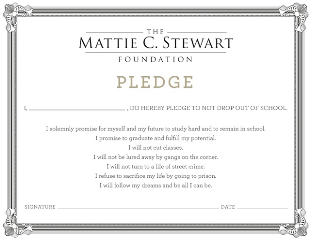
I stepped into the seventh grade literature class to watch and discuss scenes from the movie “Freedom Writers”.  A boy greeted me with “I know you!”  I smiled, thinking of the time spent over the years with students at SMS.  I assumed he remembered me from another class, the hallways, or at some school event.  He said, “You talked to my grandparents.  You gave them a piece of paper for me to sign.  I signed it and it’s in a frame on my bedroom wall.  It’s my promise to stay in school and to not do drugs or join a gang.”

It took me a minute to shift gears and realize his grandparents must have come to a parent involvement night when he was a fifth grader.  We had watched “InsideOut”, a documentary about the epidemic of school drop outs and the value of staying in school.  The parents were given certificates to take home to their children.  They were encouraged to talk with their kids about their education, asking their fifth graders to “contract” with them to choose school instead of dropping out.

Positive outcomes are always good news.  Coming from a seventh grade boy made it even more special.  As I replayed the scene throughout the day, I began to think less about my part in the outcome and more about the power of a piece of paper.  For two years a piece of paper hanging on a boy’s wall had reminded him of his grandparent’s commitment to him and their investment in his future.  That framed piece of paper was their celebration of his commitment displayed in a prominent place.  It was a subtle, daily message that they expected him to keep his part of the bargain.  A paper statement of their belief in him.  And he clearly got it.  Just a piece of paper, printed in bulk from my computer, handed out to multiple fifth grade parents.  Just a piece of paper, turned into so much more by grandparents and a grandson who believe in possibility.

My youngest daughter created a time capsule in a shoebox as an eighth grade science assignment.  She spent several days filling her box with bits and pieces of her life.  I didn’t know the contents of her time capsule until ten years later when the science teacher, now administrator, brought my daughter’s box to me.  I raised the lid for a walk down memory lane through the keepsakes chosen by my daughter to represent her eighth grade life.

There were snapshots, trinkets, movie tickets, drawings, and pieces of paper…post it notes…from me, dropped in a lunch bag, stuck in the front of a binder.  Notes that said, “I love you”, “Have a great day!”, “I’m proud of you.”.  Pieces of paper that an eighth grade daughter chose to keep at a time when becoming a person separate from her mother was part of her job.

Remember the MasterCard commercials that listed items one at a time followed by their price tag.  Then the resonant voice read the last thing on the list, usually something involving human connection.  After a pause for effect, the voice said, “Priceless.” The commercial reminded us the value of some things goes way beyond a dollar amount on a price tag.

Sometimes a piece of paper is just a piece of paper.  Sometimes a piece of paper is a relationship, a child’s drawing hung with a magnet on the refrigerator door, a reading award, a “have a great day” post it note in a lunch sack, or a boy’s signature on a certificate that says “I will stay in school”.  That’s when a piece of paper becomes. . . “Priceless”.  Create a priceless relationship moment in someone’s life today.  All it takes is a piece of paper.

What’s in a name?

The radio host was giving the latest update on the BP oil spill in the gulf.  He reviewed the numbers…of gallons of oil, dollars lost, estimates of damage, benefits owed to those affected, and the lives lost.  Then the show took an unexpected turn.  The host began to list the names of the men who died while working on the Deep Water Horizon.

He spoke about each man, painting a brief, personal portrait of his life.  He talked about wives and fiancés, children, unborn to young adults.  He told about interests and hobbies.  He gave witness to each life and the tremendous void left by each death.  I felt the weight of each loss as it spread beyond family to friends, to communities, to a nation, and to me.

I realized that in spite of the months of “late breaking news” about the BP catastrophe, I had only heard these men mentioned a handful of times since the day they died, and only as a group of 11 dead.  This was the first time I knew them individually, by name, with a life story.  I was embarrassed and ashamed by the lack of attention given to this loss.

Numbers are important.  They tell us the size of impact, whether we’re talking about the casualties of war, the rise in poverty, the dead after Katrina, or how many victims of domestic violence are housed in shelters.  Numbers tell us something must be done.  But numbers don’t speak to our heart.

Names are different than numbers.  I’ve known since April 20, 2010, that 11 workers died in the BP explosion.  But it wasn’t until I heard their names and stories that they stepped off the news page and became real.  These men who had lived, worked, loved, and died are now my loss too.

If numbers tell us something must be done, names tell us we must do something.  Names tell us that each number represents a person, a history, a story not unlike our own.  We are not separate in our moments of joy, not isolated in moments of loss. Ernest Hemingway knew it when he wrote:

“Ask not for whom the bell tolls, it tolls for thee.”

On April 20, 2010, eleven men died while working on the Deep Water Horizon oil rig in the Gulf of Mexico.  Their names are listed below.  Their loss calls us to care and to act, for their deaths are our loss too.


Jason Anderson, 35, Bay City, TX, father of two.
Aaron Dale “Bubba” Burkeen, 37, Neshoba Co, MS, survived by his wife Rhonda and two children.
Donald Clark, 48, Newellton, LA, survived by his wife Sheila, two sons, and two daughters.
Stephen Ray Curtis, 40,  Georgetown, LA, survived by his wife and two teenage children.
Gordon Jones, 28, Baton Rouge, LA, left wife, Michelle, who was three weeks from delivery of a daughter.
Roy Wyatt Kemp, 27, survived by his wife Courtney, and two children.
Karl Keppinger, Jr., 38, Natchez, MS, veteran of Operation Desert Storm in Iraq, father of one child.
Keith Blair Manuel, 56, Gonzales, LA, father of three daughters, avid LSU fan.
Dewey Revette, 48, State Line, MS, 29 years experience drilling.
Shane Roshto, 22, Franklin Co, MS, survived by his wife, Natalie, and a toddler son.
Adam Weise, 24, Yorktown, TX, youngest of four children, started working offshore after graduating from high school.

Maybe it is that simple.

A few years ago I joined a group of women at a “thank you for your commitment and service to education” brunch at the school district superintendent’s home.  There were administrators, teachers, support staff, most with many years of service educating our children.  We enjoyed good food, good conversation, and the connection that comes with a shared purpose.

I said my “good-byes” and stood to leave.  On my way to the door one of my colleagues said, “Before you go, give us some words of wisdom.  You always have such good things to say.”  There are a dozen reasons why a sudden, unexpected request requiring a quick, verbal response turns my brain into a black hole and my mouth inoperable that I won’t go into now.  All the visiting had stopped and all eyes were on me.  I think I said something like a profound “Uh……….” which bought me a little time.  And then it came to me.  A question I had been asking myself almost daily for the past several months.  So I said:

“Nearly every day before I walk into school I ask myself, ‘I wonder what would happen if we were all just nice to each other today?'”

Everyone smiled, made a few comments, and I made my exit.  The question stayed with me.  I hear it in my head at work, at board meetings, listening to the news, observing parents and their children, and listening to political candidates.  What if it really is that simple?  As simple as being nice to each other.  How might things change if we were just nice to each other. . .

  • in discussion and debate
  • in difference and disagreement
  • during conflict and confrontation
  • with adversaries and antagonists
  • with family, friends, and even strangers

Perhaps Plato had pondered this question when he said, “Be kind, for everyone you meet is fighting a hard battle.”

The Essential Conversation

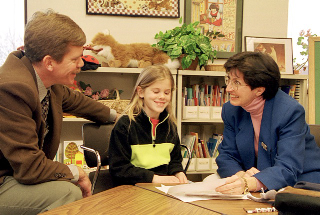
I love books.  My idea of a great time is going from section to section in a bookstore, the bigger the better, looking for titles and covers that spark my curiosity or speak to an interest or need.  I have been known to buy a book because a title caught my eye and I trusted the contents to be just as interesting.  “The ESSENTIAL Conversation:  What Parents and Teachers Can Learn From Each Other”, by sociologist, teacher, and parent, Sara Lawrence-Lightfoot was one of my best “title” purchases.  If the title hadn’t caught me, the introduction would have sold the book.  The author wrote:

I believe that for parents there is no more dreaded moment, no arena where they feel more exposed than at the ritual conferences that are typically scheduled twice a year–once in the fall and once in the spring–in schools. . . it is also the arena in which they [teachers] feel most uncertain, exposed, and defensive, and the place where they feel their competence and professionalism most directly challenged.”

After a quick read, the book went on a shelf until a few months ago.  As school came to a close I thought back over nine months of encounters with students, parents, and teachers.  I explored ways to make those times more helpful, more effective.  I found myself thinking of how our interactions as parents and teachers are occasionally like angry ex spouses, anxious and defensive.  We know that children often get lost and compromised in the crossfire of divorce.  I began wondering how often children are also hurt by our failure to work together as families and schools, parents and teachers.

Parents and teachers are two tremendous resources with the power to impact our children and society.  The times I have watched adults step past their anxiety and uncertainty to talk to each other in a parent/teacher conference in order to help a child succeed in school have excited me. Unfortunately we often avoid the encounter completely.   Or we approach our meeting as adversaries, becoming defensive and territorial in ways that rob us of the very thing we want, to be a part of preparing our children for a healthy, successful adulthood.

I thought of “The ESSENTIAL Conversation”, and what an appropriate, meaningful title it is.  I pulled the book off the shelf and began to read again, more thoughtfully this time.  I reviewed my own school experience trying to imagine my parent’s “conversations” with teachers.  I recalled sitting in the parent chair across from teachers as we discussed my children’s performance and progress.  I wondered if both the teachers and I were worried that we would be “blamed” for the problems and would have to give up all credit for the successes.  I took some comfort in Lawrence-Lightfoot’s thoughts:

“From my point of view there is no more complex and tender geography than the borderlands between families and schools.”

“. . . my own hard-earned wisdom as an educator and social scientist concerned about these matters did not prepare me for the depth of emotion and drama I felt in parent conferences.”   “I always suspected that other parents were experiencing some version of my anguish, but that they too were struggling alone and making it up as they went along.”

“I could also tell that teachers had their own deep concerns,  their own sense of exposure and vulnerability.  And I knew that most of them had not been adequately prepared in their professional training programs to build relationships with families as a central part of their work. . .”

We are less than one month into a new school year.  How can we take advantage of all our family/school encounters in ways that encourage our children to learn and enhance their learning environment?

Whether you are teacher, parent, or both:

  • Remember this “conversation” isn’t about you, it’s about your children.  Learn to calm your own anxiety so it doesn’t get in the way of working together.
  • Believe that sharing your observations with that other adult will allow you both to discover solutions to problems and will magnify the celebration of success.
  • Recognize each other’s efforts.  Kudos help us know we “did good” and motivate us to do more.
  • Be willing to start the conversation and to keep it going even when you disagree.  Tolerate the discomfort for growth.

For schools:

  • When you say parents are welcome at school, really mean it.
  • Encourage family involvement and look for creative ways to make that possible.

For families:

  • Be present in your child’s school experience.
  • Know their teachers and their curriculum.
  • Attend school activities.
  • Communicate with teachers in person, by phone, and in writing.

“The ESSENTIAL Conversation” considers “how the tiny drama of parent-teacher conferences is an expression of a larger cultural narrative.”  For me it is a reminder that the “tiny drama” of parent/teacher conferences isn’t so tiny after all.   You be the one that begins the conversation.

Altered Again

I never met Jill Hollis.  In fact I had never heard of Jill Hollis.  That changed last Thursday.  I was in the car running errands, listening to bits and pieces of “The Story” with Dick Gordon.  I found myself in back story, not knowing where it began.  It became clear as the story continued that Jill Hollis had, for some time, struggled with some kind of disability and in the midst of that determined that she would not live a diminished life.

I sat in the car outside my next stop totally absorbed by the archived interview with this courageous woman.  As the story neared an end Dick informed his listeners that Jill Hollis had been diagnosed four years ago with ALS, Lou Gehrig’s disease.  He spoke of the blog she created as her disease progressed.  And then he was expressing his sadness and sympathy that Jill Hollis had finished her battle two days earlier, Tuesday, August 31.  I was caught totally off guard and felt a sudden sadness that I was only now discovering this woman and her story.

Jill Hollis hovered in my thoughts for the rest of the day.  As soon as I could I went in search of her blog.  I wanted to hear her words, have a sense of her journey, and remember her.  The blog home page loaded.  The title:  Altered.  She had captured her experience in a single, clear, complete word.  I read her thoughts and her family’s in the days leading up to and following her death.  I found courage, fear, determination, growth, humanity, all expressed with unedited honesty as ALS continued to alter her.

Jill’s blog title has stayed with me, surfacing for another look from time to time.  Altered.  Aren’t we all “altered” by living?  We come here so innocent and in a very short time begin to lose that innocence to experience.  Don’t we all, like Jill, have the chance to decide we will live fully and undiminished in the face of loss and limitation.

Sally Jesse Raphael, the talk show host of 25 years ago, welcomed a mother and her 9 year son on her show.  Both had been severely burned and disfigured in a gas explosion in their home a few years before.  The son had had multiple surgeries with more to come to remove scarring and rebuild his face.  An audience member asked the mother how she had helped her son cope with the stares, comments, and questions that often came when they were in public.  The mom responded, “I’ve told him everyone has scars.  We just wear ours on the outside.”  What an insightful mom!  And she’s right.  We do all have our scars, left by the life decisions and experiences that have altered us.  Being altered scars, but it also allows us to discover our own strength and resilience.  And then, we are altered again.

I don’t know Jill Hollis, but her story has altered me.  My thoughts and prayers are with her family during their unspeakable loss as Jill has been altered again to a journey without ALS.  Thank you Jill.