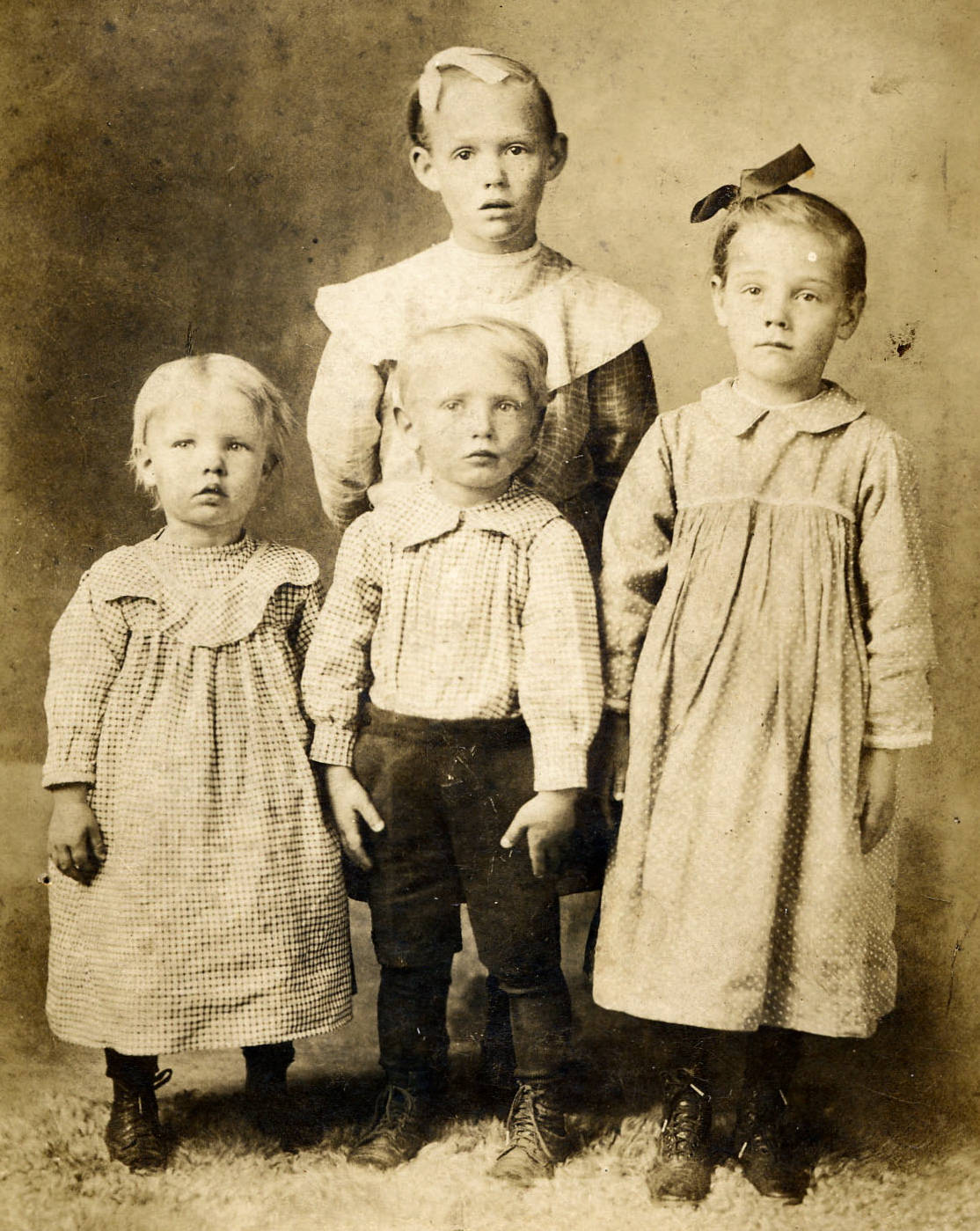
a motherless child

“Sometimes I feel like a motherless child.  Sometimes I feel like a motherless child.  Sometimes I feel like a motherless child, a long way from home,”.

Reading this post may be like sifting through a pile of scattered thoughts.  A reflection in itself of the fact that losing a parent is an experience that covers the lifespan.  My hope is that you will see it as a continuing conversation, not a final answer.  And that you may find some encouragement and strength for your journey.

The loss of a parent may be one of the broadest experiences of loss.  No stage of life guarantees us that our parent’s death will go unfelt or unmourned.  No stage offers us immunity from feeling that loss, or facing the change it brings.

The younger we are the more our loss may encompass grieving the parent we never knew.  For a child, the death of their parent can mean living with the nagging feeling of having been left.  Not unlike being left on a hiking trail without our guide, before we’re confident of our ability to find our own way.  When one parent dies, a child often loses the other parent to their own grief.  We may feel isolated as we try to protect the other parent from feeling our shared pain.  Sometimes we arrive in adulthood carrying the wounds of childhood losses experienced before we had an older, wiser, more forgiving language.  A language to help us both describe and soothe our pain.

The feeling of being left can come at any age.  As though the color of abandonment is present for each of us, just in different shades based on the time and circumstances.  When my dad’s mother died I recall him saying reflectively, “Now I’m the oldest living member of my family”. There was sadness, resolve, and a touch of uncertainty in his voice.  I was surprised.  There were ways he had lost her long before that moment, to the dementia that swallowed her up one bite at a time.  And even before that when her 13 year son died suddenly from spinal meningitis.  She was forever changed, and at age 11 my dad lost his brother and became the oldest son, bearing the weight of hopes and dreams not yet lived.  It struck me that all of those losses, sudden and progressive, did not protect him from the finality of that moment.  Of knowing that he would never have more of her in this life than had been gathered from his birth up to the time of her death.  And that in the starkest of realities, the buck now stopped with him.

Our experience of loss may also be colored by the gap between who we needed our parent to be and who they actually were.  We can believe that an abusive parent’s death will bring relief and freedom from our pain, only to discover that in being rid of harm we also lost all possibility that the parent we need would someday appear.  Whatever has been left unsaid, the acknowledgement of harm, the “I’m sorry”, the “Please forgive me”, will forever be unspoken, silenced by our parent’s exit.  It can be a devastating and confusing loss.

Words said that can’t be taken back.  Words never said that we wish could be spoken.  Questions never asked.  Choices never explained.  Stories never told.  All these and more are frozen in time for us when a parent dies.  Their weight varies depending on where we are in this marathon. From being parented in infancy through the love hate race of adolescence.  From the renegotiated relay of adulthood to the discomfort of accepting the baton to run this final leg of the race as our parent’s parent.  And if they cross the finish line before us, to know it is ours to grieve the success and failure of their life, ours to allow them to rest in peace in their death.  Ours to learn to run our own race untethered by what is now behind us.
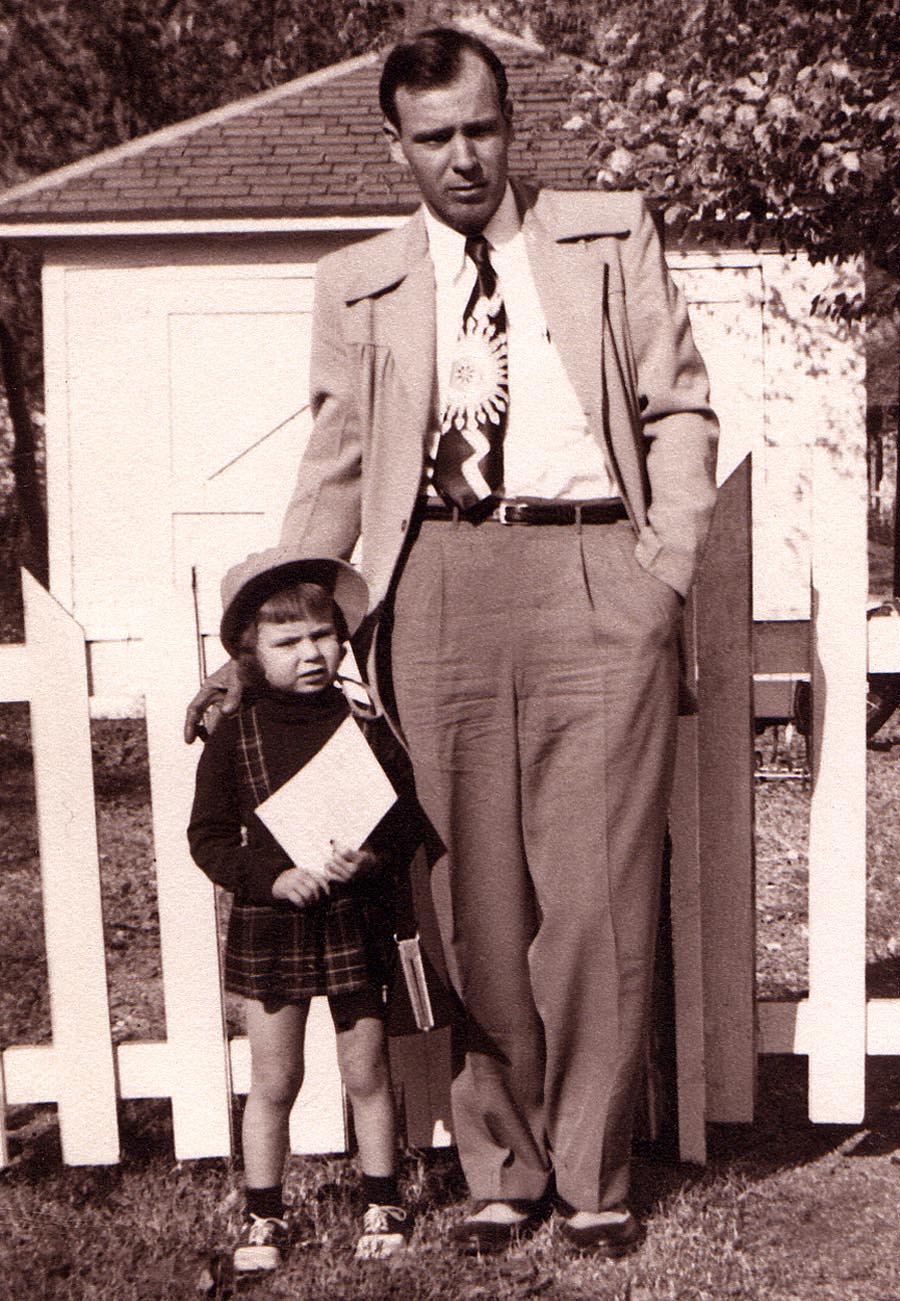
“I am amputated, inconsolable.  My father has died.
Now I must invent him, perhaps fictionalize, mythologize him.
Most of all, I will have to find a way to mourn him.
E. M. Broner, Mornings and Mourning:  A Kaddish Journal

Versatile Blogger

A heart felt “Thank You” to Jen at Step On a Crack…, for nominating the GrowthLines blog for The Versatile Blogger Award.  I began blogging as a way to think out loud with a larger community, outside the therapy room.  To think about the growth that comes from our experiences.  To recognize the incredible resilience of humans.  To highlight the hope to be found even in our darkest moments.

In the process of writing my thoughts, I have encountered an amazing fabric of fellow travelers who push me to listen more closely, think more clearly, and to see the raw beauty in each of us.  Fellow bloggers have expressed that beauty with humor and wit.  With warmth and encouragement.  With agony and longing.  With confusion and uncertainty.  With candor and honesty.

Thank you, Jen, for your continued presence in the blogging world.  Thank you for your willingness to give us a window into the complexity of your relationship with your mother, and your grief over her living, and her dying.  You invite and inspire all of us to engage in honest conversation about our own lives.

According to the requirements of the award I must:

• Nominate 15 other bloggers

• Inform my nominees

• Share 7 random facts about myself

• Thank those who nominated me

• Add a picture of the award to this post

Congratulations Versatile Bloggers!

I am honored to nominate the following blogs for the Versatile Blogger Award:

http://www.thursdaymorningmeditations.wordpress.com – Emerson J. Winchester invites me to think with her every Thursday morning through her writing.  Her meditations push us to think as a springboard to action, as in her recent post , Pop Music Failure (or, A Step in the Wrong Direction).

http://www.creatingyourbeyond.com – Check out this blog on “survivors creating a life beyond Loss and Trauma”.  I found Brenda’s post on self-forgiveness to be insightful.

http://www.findinglifeinadeath.wordpress.com – a rich and poetic blog about the simultaneous dance we do with life and death, loss and change.  The final post of 2011 was especially thought provoking.

http://www.thereinventedlass.wordpress.com – join a fellow blogger at a crossroads with the chance and challenge to reinvent her life.  One view of the crossroads can be found in the Weekly roundup post.

http://www.ptsdawayout.com – a wonderful “voice of experience” resource for people living with complex PTSD.  “Show up empty and experience everything joyfully.”

http://www.fewerforgreater.wordpress.com – Consider fewer possessions for a greater quality of life.  I was intrigued by the most recent post, Pick four people.

http://www.workthedream.wordpress.com – I was delighted to discover this blog about daring to dream your life, and then working the dream.  I was even more delighted to discover that the dream is being worked out in the shadow of one of my favorite places on this earth, The Spanish Twin Peaks near LaVeta, CO.  The indigenous tribes of the area called them Wahatoya, the “breasts of the world”.

http://www.grandfathersky.wordpress.com – Written by “a poet and a dreamer”, asking “Why Life?”  Beautiful photographs and thought provoking posts, such as Walking Between Worlds.

http://www.cocorum.wordpress.com – She’s a seventeen year old thinking beyond her years, and writing her thoughts.  Listen to her in “What’s the point of kindness?”

http://www.katiedodson.wordpress.com – following the musings at the People Always Leave blog, and read Hanging By A Moment

http://www.belleofthecarnival.com – Join the “head clown” at the Cameron family Carnival as she looks at being family yesterday, today, and tomorrow.  Hear her honor her own father’s spirit in A Skier’s Dream

http://www.nidhisays.wordpress.com – Thank you for poetry and prose.  Make sure you read “To a special man…”

http://www.ariannasrandomthoughts.com – Arianna invites us to join her in a discussion of resilience, motivation, and personal development.  She sometimes uses sports as a metaphor for our discoveries about life, as in Press On!  What Rowing Taught Me About Resilience

http://www.anissastein.wordpress.com – an interesting blog about “living the life less traveled”, which includes among other topics, “Mistakes introverts make”.

http://ashleycherie.wordpress.com – Another young, talented artist who is letting the blogging community join her as she “paints” her thoughts with words.  I appreciate her candid thinking in Recap: 2011.

Congratulations again to my Versatile Blogger nominees! 

Now for the seven random facts about me:
  1. I have lived long enough that after years of wearing glasses and contacts, I now have 20/20 vision to see anything within 18 inches of the end of my nose.  Since I love to read, write, and “google”, all of which fall within the 18 inch range, I’m ecstatic.  Anything past the magical 18 inches is a blur, including the glasses I took off in my moment of “clarity”.  On more than one occasion I’ve had to put in contacts in order to find where I left my glasses.
  2. I too am a “one-sneezer”, and sometimes pretty loud.  I am occasionally embarrassed when a sneeze refuses to be stifled.  On the heels of nearly every sneeze I have a memory moment of my grandad.  Our sneezing behaviors are identical, which means my sneezes are often followed by a smile.
  3. I grew up watching my Dad work on cars, literally a “shade tree mechanic”.  Later, with the luxury of a garage, he taught me how to maintain and repair my first car, a 66 Mustang.  I spent years worth of happy moments in that garage getting my hands dirty and my heart filled.  Some of my hardest moments were being there alone, packing up the remains of my shade tree mechanic dad, when dementia made it necessary for him to move to a nursing home.  Sometimes I go to my own garage and hold his socket wrench in my hand for old time’s sake.
  4. When I was old enough to know better, I left my grandad’s horse grazing in the yard while I went to get a drink of water.  In less than five minutes, Old Red had caught the saddle horn on the clothesline wire, and was racing around the yard in a panic dragging one of my grandmother’s new iron clothesline poles behind him.  The other pole was bent to the ground.  I had to wait for grandad to come home so I could look into his clear, blue eyes, and explain what had happened.  I had to live knowing I had destroyed something my grandma had waited for, for years.  Red and I both survived the experience, him with a small cut over one eye and me with a better understanding of responsibility, and that it takes less than five minutes for things to “go to hell in a handbasket”.  My grandparents kept on loving and investing in me in spite of my mistakes…, priceless.
  5. I like hiking with a camera and a sketch pad.
  6. I’ve been to the New Orleans Jazz & Heritage Festival every year since Hurricane Katrina.  If I could rewind my life, I would shake the limitations of a “no dancing” religious code, and learn to do the Zydeco.  The next best thing is to be at the Fais Do Do stage watching a mass of people dancing zydeco to live music.
  7. I love Vivian Higginbotham’s seafood gumbo, and am so glad she gave me her recipe and taught me how to make it before she died.


The language of loss

There are a handful of books in my library that I decided to buy before I knew much about the contents, because the title was intriguing.  One of those is Steve DeShazer’s Words Were Originally Magic.  I thought of the title again when I decided to write about “the language of loss”.  I discovered that DeShazer’s title was inspired by these words.

“Words were originally magic and to this day words have retained much of their ancient magical power. By words one person can make another blissfully happy or drive him to despair.”     Sigmund Freud

I don’t know that the language of loss is magical, but it is powerful.  It has the power to heal, to offer respite, to comfort.  It also has the power to confuse, to limit, and at its worst to harm.  Language is at the center of the things we tell ourselves, how we think out loud with others, how we experience this life. The words and phrases we use are like the weft and warp on a loom that determine the pattern and texture of the fabric.  I wonder how the fabric of our grief might look if we wove it with a different language.  Would it comfort us to know that our experience and expression of grief is not a sign of craziness, but a richly woven fabric of our common journey?

I have sat with many people over the years in moments of grief, but I can only speak with certainty from my own.  I can’t say “closure” or “saying good-bye” are a help to me if they mean I will come to an end of grief, that I will be done with who I lost.  If my job in grieving is to finish, and to finish means to end the relationship,…well, I’m going to avoid that finish line at all costs.  I have no intention of being done with those I’ve lost.  But what if our relationships are not bound by time and space.  What if our grief is not about the end of relationship, but about how relationships change when death comes.

In the movie Shenandoah, Charlie Anderson, played by Jimmy Stewart, is a widower trying to keep family and home together in the midst of the Civil War.  Charlie often visits the family gravesite to talk with his dead wife Martha.  He tells her about the children and the war.  He asks her questions and shares his thoughts.  These private, intimate moments between Charlie and Martha assure us that our relationships continue beyond death.  In the midst of the sadness and pain of loss, Charlie Anderson also finds comfort and the strength to continue.  Even in death, Martha remains his partner for the journey.

When we don’t talk about death, we are at risk of believing that our experience of death is not only unique, but may be evidence that we’re crazy.  We may worry that our ongoing involvement with our loved one means we’re “stuck” in our grief.  We may also worry about what it means when some of our memory seems to be slipping away.  Sometimes we can remember details of a person’s hands, can hear their voice, can see them moving, but their face begins to fade.  I don’t know what it means that we can often call to mind so much about someone we love, while their face becomes a blurry, veiled image.  If our eyes are windows to our soul, perhaps a face that fades in our mind is a reminder that our relationship is no longer defined by a physical body, but now fills the universe.

If we are going to discuss death, we need language.  But experiencing loss and death is not the same thing as the language we use to describe it.  Language can be concrete and limiting.  Loss continues to remind us that it will not be bound by a word.  That it is often gray and messy.  Don’t be afraid of the language of loss.  It’s the willingness to speak our loss into words that creates a language of possibility rather than limitation.

“We’re fascinated by the words–but where we meet is in the silence behind them”
                                                                                                                 -Ram Dass

After a harsh winter…

No holiday should be a time of sorrow, a place acquainted with grief.  Certainly not Thanksgiving.  There is nothing in the name that suggests loss.  It’s a time to gather with family and friends.  A time to “give thanks”.  Who wants to give thanks for loss or difficulty?  Nevertheless, we are faced with the reality that Thanksgiving is experienced in a context that includes hardship and tragedy.

I’ve thought a lot about the marriage of gratitude and grief during this Thanksgiving holiday.  Maybe it was writing the series of posts about loss.  Maybe it was spending time with three generations of family. Maybe it was attending the funeral of a friend  two days after Thanksgiving.

I decided to revisit how this holiday came to be, so I googled “Thanksgiving”.  A sentence caught my eye.

“The first American Thanksgiving was celebrated in 1621, to commemorate the harvest reaped by the Plymouth Colony after a harsh winter.”

On that first holiday they gave thanks for the bounty of the harvest, “after a harsh winter.”   Their celebration was based on having survived a season of hard work, tragedy, and loss.  They gave thanks for the gift of plenty.  They gave thanks for the discovery of their own strength and resilience through difficulty.

President Abraham Lincoln proclaimed a national day of thanks in October, 1863.  A day of giving thanks, in the midst of the Civil War.  What was there to be thankful for in a time of such internal turmoil?  How could we be grateful in the face of so much destruction and death?  Perhaps Lincoln hoped that a day of Thanksgiving might remind us of our connection rather than all that divided us.  That our strength and resilience might unite us once more.

It seems that Thanksgiving has always been about gratitude in the midst of loss.  Gratitude for the gift of time, of health, of relationship.  John Claypool came to understand gratitude “after a harsh winter,” when his ten year old daughter died of leukemia. In the midst of his grief he realized that he had never been promised a span of time with her.  That each year had been a gift.  He began to move from anger that he had been robbed of a lifetime with her, to thanksgiving for every unpromised moment shared over those ten years.  Claypool discovered the gift of his own resilience.  Grounded in the strength that comes from adversity, he made his way beyond his own winter of grief to a place of healing gratitude.

What if our clearest moments of resilience and strength are mined from the landscape of our disappointments and tragedies?  What if the key to discovering these gifts is our willingness to fall into the abyss of our grief.  Psychology Today, Psych Basics, notes that,

“Resilience is that ineffable quality that allows some people to be knocked down by life and come back stronger than ever. Rather than letting failure overcome them and drain their resolve, they find a way to rise from the ashes. Psychologists have identified some of the factors that make someone resilient, among them a positive attitude, optimism, the ability to regulate emotions, and the ability to see failure as a form of helpful feedback. Even after a misfortune, blessed with such an outlook, resilient people are able to change course and soldier on.”

What does it mean to “soldier on”?  I don’t think it means being an untouchable stoic who never falters, never sheds a tear.  I think to “soldier on” may mean that we continue to rise in all our faltering, tearful, uncertain, grieving humanness. Continuing to rise again, and again, until we find a new balance.

J.R. Martinez began to “change course and soldier on” a long time before he won Dancing With the Stars.  After his win, he received a note from US Secretary of Defense, Leon Panetta that read:

“Your strength and spirit captivated the nation, and your victory sends a strong message about the strength and resilience of our wounded warriors.”

In reality, we are all wounded warriors, struggling to soldier on after our own harsh winter, to a place of thanksgiving.  I hope as you sat with loved ones at your Thanksgiving table, you received the gift of strength and resilience that comes after surviving a harsh winter with grief and gratitude.

Turning the day RED

Today, December 1st, is World AIDS Day.  For years the symbol of a single red ribbon has called us to care, and to act.  In 1996, I completed my master’s thesis on the impact of  individuals disclosing to their family that they were HIV positive. During my research I interviewed people diagnosed with HIV or AIDS and in various stages of their journey with a terminal illness.  My time spent hearing their stories was life changing.

I discovered individuals living with courage in the face of a disease that isolated and ostracized.  I discovered many families rising up with compassion and integrity to surround their loved one with their presence.  In spite of the stigma, the known and the unknown, the agony of watching their child, sibling, parent, spouse, friend waste away before their eyes. . .they stayed, and they loved.

I discovered the power of numbers to tell us, “Somebody should do something.”.  I discovered the power of names and faces that told me, “I must do something.”.

A lot has changed in the 15 years since I heard those stories.  Too many have died.  Medicine has helped the battle be more chronic and less terminal.  We’ve gotten smarter and better at prevention.

What hasn’t changed?

  • We are still at risk of letting stigma and ignorance blind us to the names and faces of the individuals and families living with AIDS.
  • We are still at risk of believing HIV/AIDS is not our problem.
  • We are still at risk of robbing ourselves of the gift of courageous stories in exchange for our compassion and action.

We all know someone who has been affected by HIV/AIDS. . .even if we don’t know who they are.  My hope is this is the day we choose to be the eyes and ears of compassion in all our encounters, to those whose wounds are obvious, and to those whose wounds we can’t see.  After all, we are all walking wounded.