
While there is perhaps a province in which the photograph can tell us nothing more than what we see with our own eyes, there is another in which it proves to us how little our eyes permit us to see. ~Dorothea Lange

While there is perhaps a province in which the photograph can tell us nothing more than what we see with our own eyes, there is another in which it proves to us how little our eyes permit us to see. ~Dorothea Lange
On May 12, 1986, in the early hours before dawn, 19 students and adults from Oregon Episcopal school left the Timberline lodge to climb to the summit of Mt. Hood. They hoped to watch the sunrise from the top of the mountain. Six hikers turned back early while the rest continued to climb. A freak spring blizzard moved in when the hikers were about 100 feet from the summit. A hiking guide and a student turned back in hopes of finding help. The nine remaining climbers dug into an ice cave for shelter as the storm continued for three days. Rescuers found the climbers late in the day on May 14. (The Seattle Times, July 25, 1986, Jack Broom and Steve Bovey.) By the end of the day only two teenagers of the climbers rescued survived. One made a complete recovery. The second had both legs amputated. (AROUND THE NATION, May 19, 1986.)
About four years after the tragedy on Mt. Hood, I heard Doug Manning, author of Don’t Take My Grief Away From Me, talk about the loss of a child. He spoke about the depths of grief for parents and the process of holding on to their child’s life to insure its meaning. And then he talked about the lives lost, and saved on the mountain. He had spoken at a conference in Portland shortly after the tragedy. He talked about those who died, and about the young man, 16, who survived, thanks to the amputation of both his legs. He spoke about a hidden face of grief when he said:
“We’re going to have a hard time letting this young man grieve the loss of his feet. We’re going to tell him how lucky he is that he survived. But no matter how lucky he is, he’s still going to miss his feet.”
As if the grief of death is not enough, we are faced with the grief of what was lost in surviving. Sometimes the mere fact that we survived becomes our loss, our shame. That for no apparent reason someone died, and we did not. We bury those losses inside, keeping them silent because they are without merit compared to someone else’s.
 The loss of a home, or a job would never compare to the loss of a loved one. But what if loss isn’t about comparison, but connection? What if by being present for each other in all our layers of loss, we can begin to understand our relationship with grief. What if the loss of lesser things teaches us that grief of any size is hard, and that we can survive it? Grief has many faces. We may find the strength and comfort of healing as we learn to see them all.
 The first time I saw a portion of the AIDS Memorial Quilt was in 1991, in Wichita, KS. It was a small part of the entire quilt, and it filled the floor of the convention center. I had read about the quilt from the beginning. I had seen photographs of the display on the mall in Washington, D.C. None of that prepared me for the flood of emotion I felt as I walked among the quilt blocks on display that day. Looking at the first block, I knew I had stepped into sacred space, as though I had been allowed to witness thousands of private moments of loss and remembrance.
Each quilt block held the remnants of a life. Stories told piece by piece through pictures, pieces of clothing, belongings that identified each person as unique, known, loved. The fabric blocks were tangible evidence that this person participated with family and friends in this life, and was now gone, but never forgotten.
Harold Marcuse, is a professor of German history at University of California, Santa Barbara. His research on the view of different groups looking back on the Nazi period since 1945 is presented in his book, Legacies of Dachau, 1933-2001. One of the stories is of German pastor, Martin Niemöller’s visit to Dachau concentration camp in November 1945. Noemöller had been imprisoned at Dachau from 1941 to April 1945. Marcuse notes that Niemöller’s November diary entry and subsequent speeches suggest returning to Dachau prompted thoughts that by the early 1950s had become this familiar poem.
First they came for the
socialists, and I did not speak out
because I was not a socialist.Then they came for the
trade unionists,
And I did not speak out
because I was not
a trade unionist.Then they came for the Jews
and I did not speak out,
because I was not a Jew.
Then they came for me,
and there was no one left
to speak for me.Pastor Martin Niemöller
Today, December 1, 2011, is World AIDS Day. A day that will be just another day for many. A day when many will not speak out, because they believe AIDS is someone else’s loss. But today is a day that belongs to us all. It is symbolic of our universal loss, whether we recognize or acknowledge it. We believed AIDS belonged only to the indiscriminate, the addict, the transfused, the gay, and have said nothing. Can we hear that 1000 babies are born with HIV every day and say this loss is not ours.
I recently watched Homeless to Harvard: The Liz Murray Story with a group of middle school students. Liz lost both of her parents to AIDS over a ten year span. In the discussion following the film, a student ask “What is AIDS?” In that moment I was reminded that the advances in treating AIDS leaves us at risk of forgetting that the disease exists, and there is still no cure. That people’s lives are still being forever changed, and lost. Take time today to acknowledge that AIDS is a loss that belongs to us all, and decide how you will speak out.
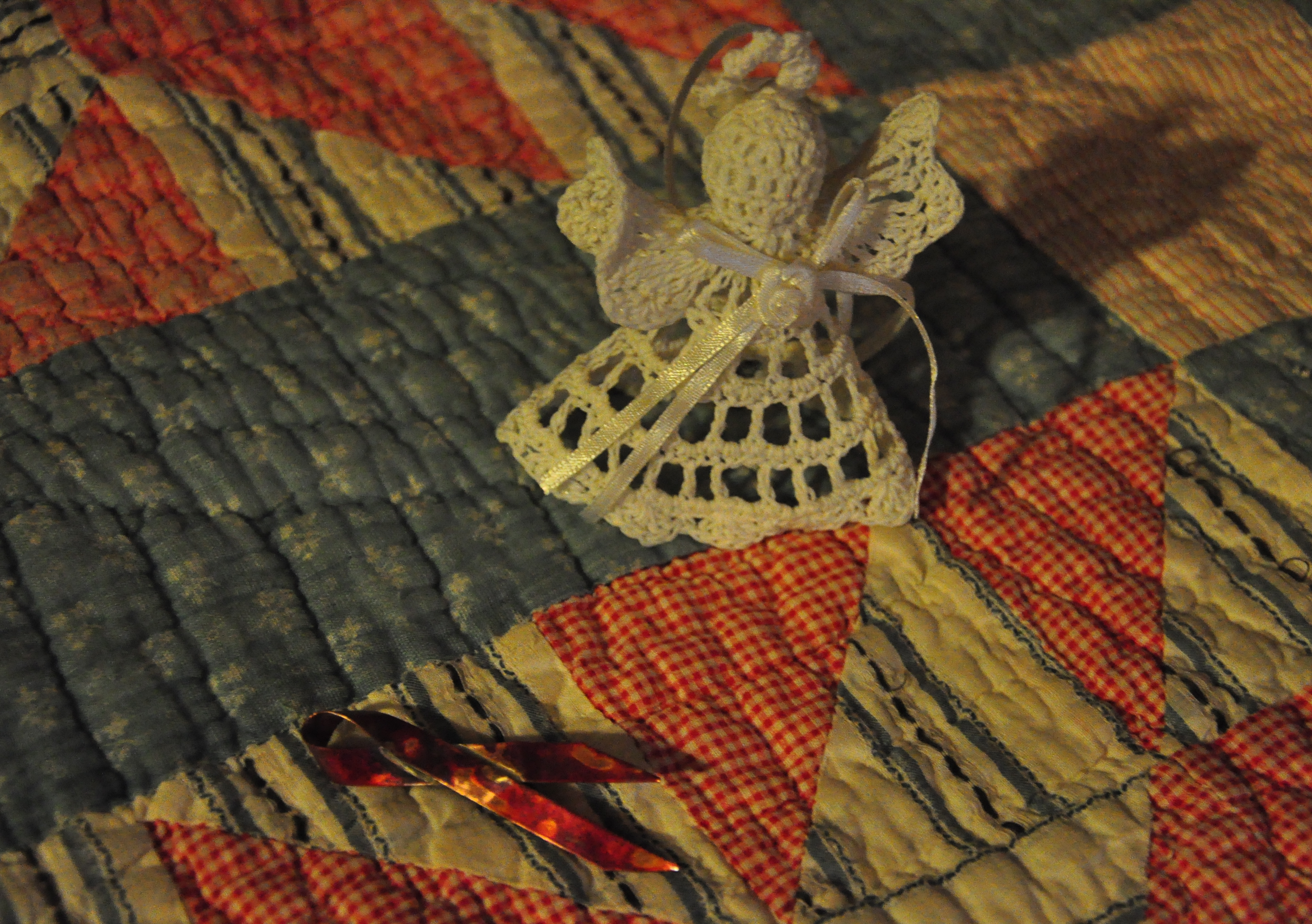
A child’s death at any age leaves a gaping hole. Before birth or after. When your child is young or old. Their death separates you from all that is living. A painful gap between the world that was taken from you, and the flat, grey world in which you find yourself. We see your pain, but we don’t know what to do with it. It is palpable. We want to acknowledge your loss, and maybe even apologize for the relief we feel every time we look at our own child, knowing that our heart is still whole, while yours is not. So we walk with you, not because we know exactly how you feel, but because we don’t want you to be alone. We find a way, however awkward, to say we’re sorry that this is now your job…
 I wish
It were not
Yours to do.
But it is
Your pain,
And you have wrestled it
To the ground,
Rising again
And again
Until you found its heart
And forced it to join you
In celebration of him,
Your son,
John Michael.
It is a mystery to me
How you rise each day
To be reminded
That you are,
And he is not.
 Perhaps because you were
His beginning,
And witness to his brief present,
Now you must become his future.
Walking where he cannot,
Breathing life into each
Precious dream
Until his footprints surround us
With all he would have been
Had he not gone so soon.

I wish
It was not
Yours to do.
But it is your grief,
And you have donned its
Black cloak of mourning
With courage,
Determined to dance again
In celebration of him,
Your son,
John Michael.

And dance you will.
Slowly,
At times halting,
Then with confidence
And joy,
Filling the world again
With color,
Vibrant,
Youthful
As you dance not your dance,
But his,
Your son,
John Michael.
© Paulann Condray Canty, 2011
“Death comes to our dances, and if we dance at all, it must be in her forbidding presence. But the wondrous conclusion is that we who must die, must dance, and that both are our destiny, and neither dying nor dancing is missing from the whole of life.” —-Calvin Miller
Thank you, Skip and Marsha, for living your journey of turning mourning into dancing before us. You give us hope that having come through the dark night, we too can return to the dance. Thank you for not hiding your pain from us. Thank you for letting us join you in celebrating your son’s life.
In Memory of
John Michael Gore
July 27, 1984 – October 11, 2009
 My grandfather died at sixty nine, after a life filled with farming, ranching, and carpentering on the side. My great grandmother, Nora, was still living and ninety years old. She had lost her oldest grandson, and less than two years later, her husband. She had been a widow for thirty five years. I was devastated by my grandfather’s death. But, I guess I thought my great grandmother had seen so much loss and grief in her ninety years, that it was different for her. Maybe she had gained immunity from loss. And then she was in front of his casket, weeping and repeating, “My baby, oh, my baby”, a mantra that captured all she had lost. In that moment I knew there was no age limit, no statute of limitations, no point at which losing your child felt less, rather than more.
John Claypool wrote Tracks of a Fellow Struggler, following the death of his ten year old daughter from acute leukemia. He reminds us that we are all “a person of sorrows, and acquainted with grief”, for grief is ours whenever we lose something we value. Claypool identifies loss and grief , not as isolated events, but as an integral part of our life journey.
“Learning to handle these in a healthy way–learning how to lose, so to speak–is one of life’s most important challenges. It can hardly be begun too soon.”
He acknowledges our attempts to protect our children from grief, while pointing out that…
“as soon as a child is old enough to love something that can be lost, that one is a candidate to become ‘a person of sorrows, acquainted with grief.’ Very few get very far without experiencing loss in some way.
“The truth is–for every one of us–that there is no way to avoid the trauma of loss if we love even a little. This is what makes the task of learning to handle grief so important.”
I think my great grandmother had spent her life “learning to lose”. She was well acquainted with grief. I watched her handle loss by returning to life, from my earliest memories until her own death at ninety-two. I also watched her step into the painful presence of loss when my grandfather died.
I have not had to find life after the death of a child. Having stood by as friends entered this dark night of the soul, I have asked myself the question a colleague of John Claypool asked. “Those of us who have not been there wonder what it is like out there in the Darkness. Can you tell us?” Claypool’s response was both profound and ambiguous. “Yes and no.” Perhaps the path to learning to handle grief begins with the courage to start the conversation.
There may be no loss so out of sync as the death of a child. And as if that monumental death alone is not enough, the death of our child brings a partnership with loss that spans our lifetime. I heard an interview a few years ago with a mother whose young son had been killed in a bicycle accident. She described the breadth of this loss by saying,
“When I woke up the next morning, I was surprised that I was still here. I couldn’t imagine how I could have survived his death. A year later, I was still surprised. It’s been 10 years, and I still don’t understand how I’m here.”
She voices for every parent, the perpetual dance of grieving for your child while continuing to live your own life, and theirs.
My first experience with the permanent impact of a child’s death on a parent came when I was twelve years old, sitting on the bed in my Grandma’s bedroom. She was cleaning house as I followed her from room to room. There was a group  of photographs on the wall by the door. They were the last pictures of my Dad’s older brother, Junior, taken a week before he died at age 13.
He came home from school, saying he didn’t feel good, and in less than two days was dead from spinal meningitis. His funeral was held at home under quarantine, with only family present. He was something of a mystery to me, made more so by the black and white photographs that had been enlarged and hand painted in pale, transparent colors.
Grandma cleaned and I sat on her bed, staring at those pictures. Then I said, “Grandma, tell me about Junior.”. She opened her mouth to speak, and instead began to cry. I have no memory of what happened after that, of what she did or didn’t say, of how I got out of the room. I just felt the power of my question to make her cry, and the depth of her wound. Later, after I was grown, I wondered if her tears were only tears of pain, or also tears of thanks, of relief, that someone remembered and asked about her son. I knew my Grandma as a hard-working, caring woman, with a delightful, childlike laugh. Somehow she had continued living, while carrying this loss just below the surface.
Doug Manning, author and speaker on grief, tells about a friend leading a group at a local funeral home, for parents who had lost a child. An 80 year old woman was the first person to arrive. The group facilitator asked if he could help her, assuming that she was at the funeral home for visitation. She told him she was there for the group, but was uncertain about whether she should stay. He asked her if she had lost a child. She told him her story. That her son had been stillborn at a time when people didn’t talk about grief. That her husband and family refused to talk about the loss. For nearly 60 years she had been grieving in silence. She went on to say, “My husband is dead now, and it’s just me.” The man asked what she would like for him to know about her son. Her response…”The first thing I want you to know is his name is Tommy.” She had never spoken his name aloud.
Maybe my Grandma was waiting, just like the 80 year old woman was waiting, for someone to ask about her child. To join her in giving her child’s life meaning and significance, sometimes through the simple gift of speaking a name.
Loss is an experience we all have in common. It doesn’t remain common. Loss becomes unique and personal, changed by the context of our individual lives, our experiences, our history, our personalities. Many of our losses are visible, public experiences. Personal loss lived out with family, friends, community.
Miscarriage is a death that, for many, is lived out in solitary, an “unrecorded” loss. The death of a child before birth stops us in our anticipation and preparation for welcoming and celebrating a new being’s entry into our lives. Even the term “miscarriage” sets this loss apart, like other words we attach “mis” to. That somehow we failed, missed the mark, or didn’t understand what we were supposed to do. So this is the death that is sometimes unaddressed, and even ignored, leaving us to make our own meaning and grieve our loss silently and alone.
I checked my email before settling in to write about this particular loss, and discovered a reference to “The Dash”, a poem by Linda Ellis. She reminds us that it is not the dates at the beginning and end of our lives that define us, but the life lived in between. The life lived in the dash. It hit me that the loss of miscarriage is that there is no dash. The life was being lived in a mother’s womb, and death may have come before she even felt the moving, growing of her unborn child.
How do we share the grief of miscarriage? Sometimes by simply acknowledging that it is a death. The death of all you hoped and expected to experience as the parent of this child. The death of the chance for this child to establish his or her own meaning and identity in this world, their own dash.
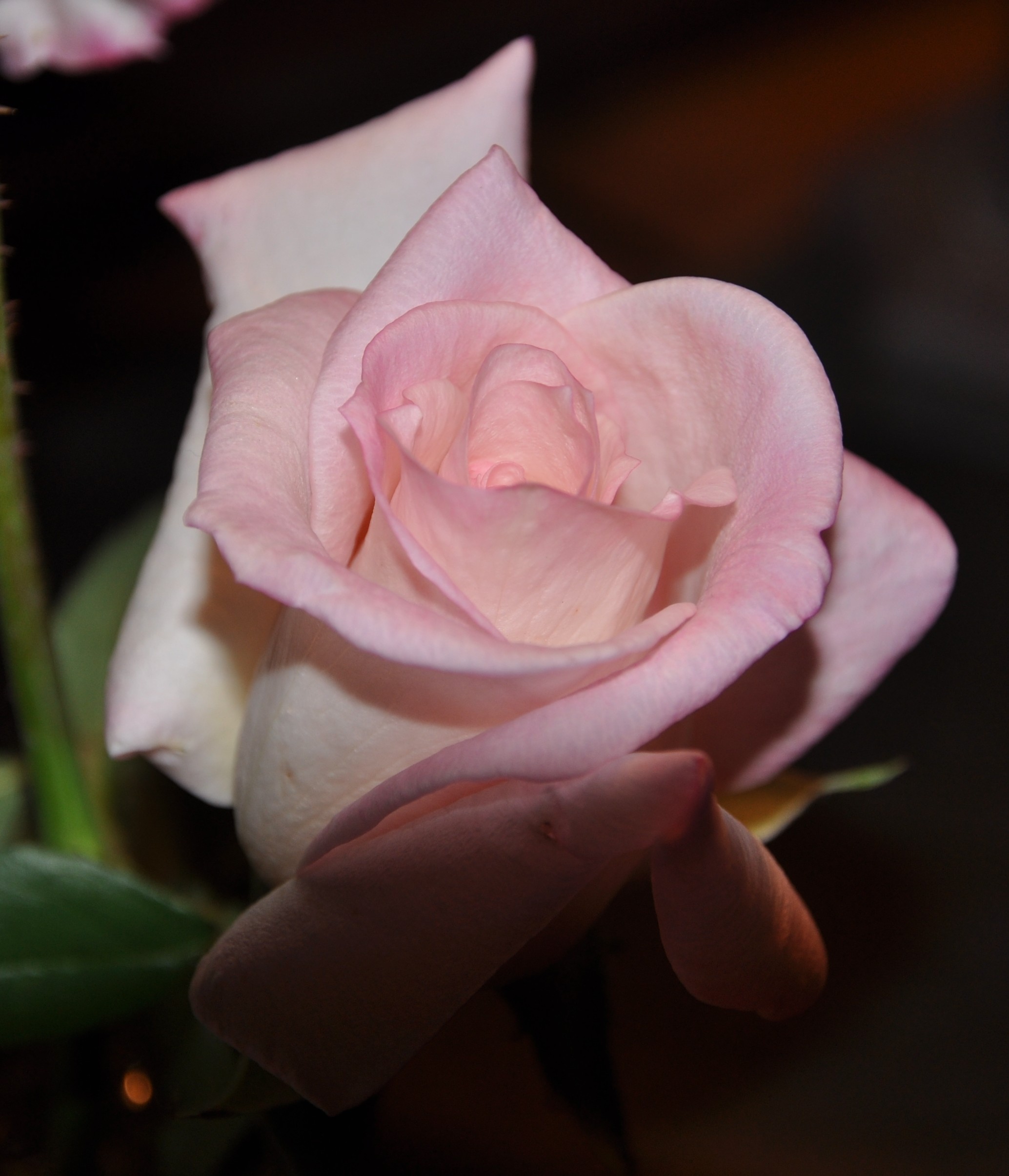
Too Soon
Tiny seed of love
That I have longed to hold,
While smallest bud,
Has ceased to grow.
Held gently in these hands
Too soon,
Blossom now within my heart
And comfort
As I let you go.
© Paulann Condray Canty
(The poem was written in 1988 to acknowledge the grief of a friend who lost her unborn child early in pregnancy)