Leaning in…

I was listening to a Hazelden webinar on adolescent suicide.  The presenter talked about the importance of engaging the suicidal teen, encouraging them to talk.  She identified the three most important words to say when you’re the one being told, “Sometimes I feel like killing myself.”  What were the words she thought had such power to connect? “Tell me more.”  Three small words with the potential to change the course of a person’s life.

“Tell me more.”  Three words that invite someone to share their pain and confusion.  Why are those words so often left unspoken?  Perhaps because encouraging someone to hand us their pain may be the right thing to do, but it is rarely the easy thing to do.   In fact the willingness to stand and hold another’s pain often leaves us facing our own discomfort.

“Tell me more.”  I replayed those three words as I went about my day.  I thought about how they fit other situations.  How powerful those words could be with those who grieve.  How in the midst of grief we long for someone to ask us to tell them more about who and what we have lost.  How holding the pain of someone else’s loss feels uncertain and uncomfortable, and so we hold back.

I was still chewing on the benefit and difficulty of “Tell me more”, when my weekly dose of Modern Family came on.  It is Phil Dunphy’s favorite day, leap day.  He has big plans to do something out of the ordinary to celebrate.  But as the day continues, things begin to fall apart.  Phil pulls the two boys, Luke and Manny aside in an attempt to salvage their celebration.  He leans toward them and says in a low, somber voice, “I have a plan.”  The boys just stand there.  Phil adds, “It’s kind of traditional to lean in when someone says they have a plan.”  Both boys immediately lean into the circle.  No hesitation. Focused.

That’s when it came to me.  What Phil Dunphy had to say was important.  And when someone has something important to say, we need to lean in.  To lean in and embrace what is being said, giving the words, the feelings, and the person our presence. Perhaps no territory feels more uncertain and overwhelming than the landscape of grief and loss.  When we find ourselves in the presence of wounded travelers and their story, needing to lean in, our first impulse may be to just stand there.  Sometimes we even step away.

Forty five years ago, John Drakeford wrote a book titled, The Awesome Power of the Listening Ear.  It was a book about the “power of simply listening to others”.  I think Drakeford’s intent was to help us push past discomfort to a place of leaning in.  A place of inviting others to tell us their stories.  What if in the presence of grief and loss, we begin to lean in, and quietly say “Tell me more.”

“Oh, the comfort, the inexpressible comfort of feeling safe with a person, having neither to weigh thoughts nor measure words, but pouring them all out, just as they are, chaff and grain together, certain that a faithful hand will take and sift them, keep what is worth keeping, and with a breath of kindness blow the rest away.” ~ George Eliot

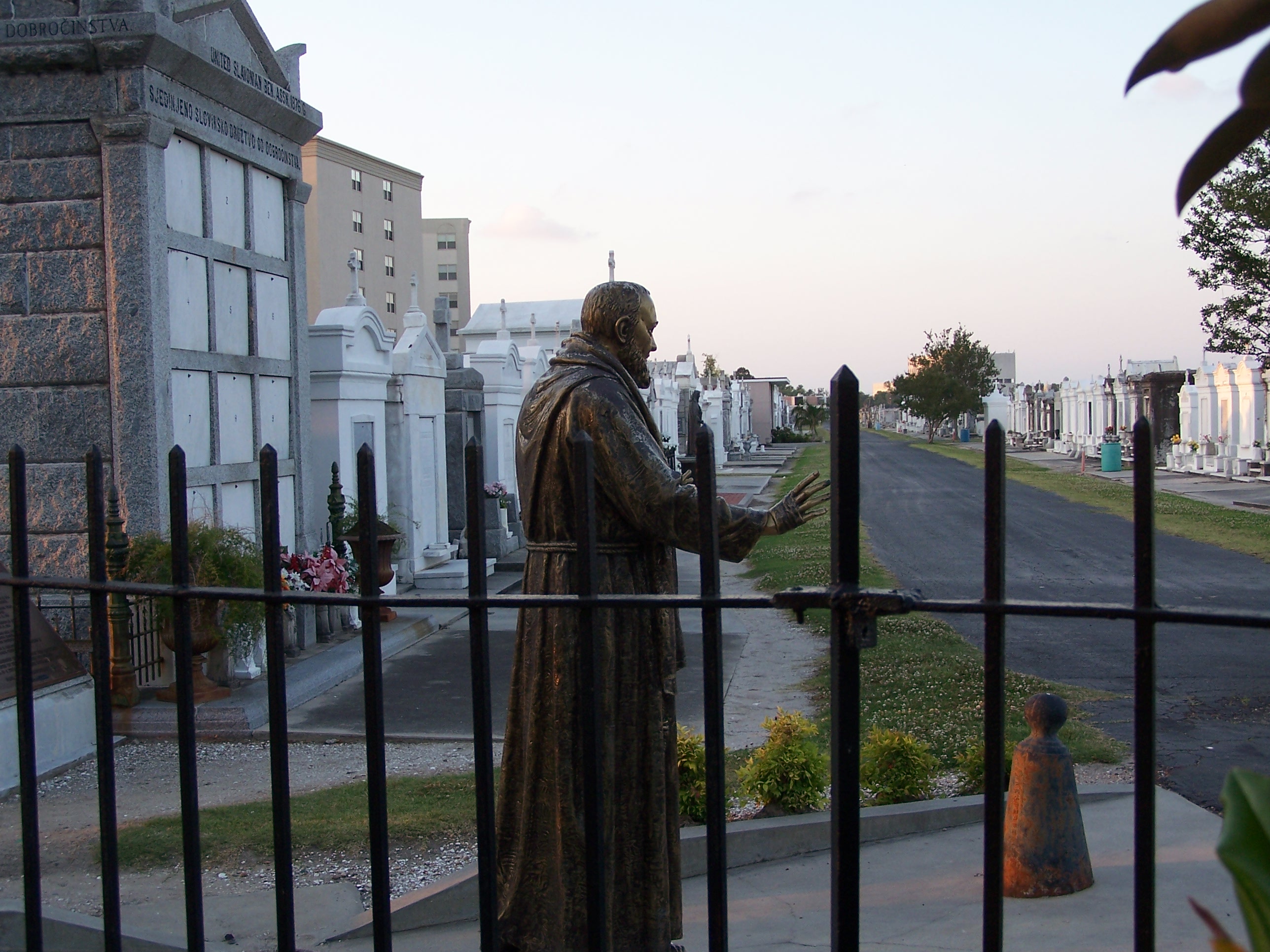
I went to their resting place,…

Carol at Carol Wiebe Wonders Out Loud, asked me not long ago if I ever wrote poetry.  I told her I did occasionally.  So Carol, here is one from a long time back.  I chose to post it now to add to the ongoing conversation about loss and grief.  Thanks for asking, Carol.  I look forward to seeing where your thoughts on shared mourning “artfully” take you.


Shared Mourning

Not planning to go, but
Drawn there just the same
I went to their
Resting place, and
You stayed by me.

I walked among grey stones
Under grey skies leaving my
Burden in shallow graves of
Sunken footsteps in the
Rain soaked ground, and
You walked with me.

Their stories came not in the
Rushing torrent of new grief but
Slowly, gently, quietly as a
Stream, small but sure, flows
Always toward its rest; I
Spoke with quiet grief, and
You heard me.

Silence settled softly on me,
Around me, with gentle tears
Raining down from grieving sky.
My sorrow cradled in your eyes, I
Remembered those who sleep.
You held my silence.

Shoulders touching, we sat each
Alone, yet bound by strong,
Unspoken words of grief and
Joy for those we love.
Comfort came in our shared mourning.

a motherless child

“Sometimes I feel like a motherless child.  Sometimes I feel like a motherless child.  Sometimes I feel like a motherless child, a long way from home,”.

Reading this post may be like sifting through a pile of scattered thoughts.  A reflection in itself of the fact that losing a parent is an experience that covers the lifespan.  My hope is that you will see it as a continuing conversation, not a final answer.  And that you may find some encouragement and strength for your journey.

The loss of a parent may be one of the broadest experiences of loss.  No stage of life guarantees us that our parent’s death will go unfelt or unmourned.  No stage offers us immunity from feeling that loss, or facing the change it brings.

The younger we are the more our loss may encompass grieving the parent we never knew.  For a child, the death of their parent can mean living with the nagging feeling of having been left.  Not unlike being left on a hiking trail without our guide, before we’re confident of our ability to find our own way.  When one parent dies, a child often loses the other parent to their own grief.  We may feel isolated as we try to protect the other parent from feeling our shared pain.  Sometimes we arrive in adulthood carrying the wounds of childhood losses experienced before we had an older, wiser, more forgiving language.  A language to help us both describe and soothe our pain.

The feeling of being left can come at any age.  As though the color of abandonment is present for each of us, just in different shades based on the time and circumstances.  When my dad’s mother died I recall him saying reflectively, “Now I’m the oldest living member of my family”. There was sadness, resolve, and a touch of uncertainty in his voice.  I was surprised.  There were ways he had lost her long before that moment, to the dementia that swallowed her up one bite at a time.  And even before that when her 13 year son died suddenly from spinal meningitis.  She was forever changed, and at age 11 my dad lost his brother and became the oldest son, bearing the weight of hopes and dreams not yet lived.  It struck me that all of those losses, sudden and progressive, did not protect him from the finality of that moment.  Of knowing that he would never have more of her in this life than had been gathered from his birth up to the time of her death.  And that in the starkest of realities, the buck now stopped with him.

Our experience of loss may also be colored by the gap between who we needed our parent to be and who they actually were.  We can believe that an abusive parent’s death will bring relief and freedom from our pain, only to discover that in being rid of harm we also lost all possibility that the parent we need would someday appear.  Whatever has been left unsaid, the acknowledgement of harm, the “I’m sorry”, the “Please forgive me”, will forever be unspoken, silenced by our parent’s exit.  It can be a devastating and confusing loss.

Words said that can’t be taken back.  Words never said that we wish could be spoken.  Questions never asked.  Choices never explained.  Stories never told.  All these and more are frozen in time for us when a parent dies.  Their weight varies depending on where we are in this marathon. From being parented in infancy through the love hate race of adolescence.  From the renegotiated relay of adulthood to the discomfort of accepting the baton to run this final leg of the race as our parent’s parent.  And if they cross the finish line before us, to know it is ours to grieve the success and failure of their life, ours to allow them to rest in peace in their death.  Ours to learn to run our own race untethered by what is now behind us.

“I am amputated, inconsolable.  My father has died.
Now I must invent him, perhaps fictionalize, mythologize him.
Most of all, I will have to find a way to mourn him.
E. M. Broner, Mornings and Mourning:  A Kaddish Journal

Papa’s Stocking

I attended a Hospice Memorial service just before Thanksgiving several years ago.  The room was filled with families and friends who had experienced the death of someone they loved during the past year.  It was a time of remembering.  And a time to focus on the journey of living through grief.

Loss is one of the few experiences besides our birth that is universal.  We would be hard pressed to find a single person in a crowd, who has not had some personal contact with grief.  How is it then that grief can feel so solitary?  Perhaps that mixture of solitary and universal is why talking about our grief brings both pain and relief.  But talking about loss and the grief that follows is important if we are to weave both joy and sorrow into our own rich fabric.

I don’t remember the name of the speaker at that Hospice service, but I remember the personal story he told about finding joy in the midst of grief.   After his wife’s mother passed away, his father in law came to live in their home.  He quickly became an integral part of their daily lives.  And then last year, in the fall, Papa had died.  The man, his wife, and two daughters were left with the empty spaces that Papa had once filled.  As Christmas drew near, the depth of their loss was magnified.  Christmas traditions that had been a source of joy, were now a reminder of Papa’s absence.  This was especially true when it was time to hang their Christmas stockings.  There was Papa’s stocking, empty.  Just like his chair at the table.  Just like the hole left in their hearts.

They began to talk about the pain of Papa’s absence, and the dilemma of how to have Christmas without him.  A new tradition, a ritual of healing, was born out of that conversation.  Papa’s stocking would be hung in its place on the mantel, with slips of paper near by.  In the days leading up to Christmas morning, family members wrote their thoughts, memories, feelings about Papa and dropped them in his stocking.  On Christmas morning after presents had been opened, and their own stockings emptied, they read the notes from Papa’s stocking. There were tears, and laughter, and connection with each other and with Papa on that Christmas morning.

I don’t know if they hung Papa’s stocking beyond that first year he was gone.  But I do know their Christmas story is a wonderful example of partnering with grief to create a moment of celebration that will last a lifetime. They had discovered that although Papa was gone, he was not lost to them.  Sometimes healing comes not from avoiding the painful moment, but from stepping into it to create a new meaning.

I wish it was not yours to do…

A child’s death at any age leaves a gaping hole.  Before birth or after.  When your child is young or old. Their death separates you from all that is living.  A painful gap between the world that was taken from you, and the flat, grey world in which you find yourself. We see your pain, but we don’t know what to do with it.  It is palpable.  We want to acknowledge your loss, and maybe even apologize for the relief we feel every time we look at our own child, knowing that our heart is still whole, while yours is not.  So we walk with you, not because we know exactly how you feel, but because we don’t want you to be alone.  We find a way, however awkward, to say we’re sorry that this is now your job…

How You Rise Each Day

I wish
It were not
Yours to do.

But it is
Your pain,
And you have wrestled it
To the ground,
Rising again
And again
Until you found its heart
And forced it to join you
In celebration of him,
Your son,
John Michael.

It is a mystery to me
How you rise each day
To be reminded
That you are,
And he is not.

Perhaps because you were
His beginning,
And witness to his brief present,
Now you must become his future.
Walking where he cannot,
Breathing life into each
Precious dream
Until his footprints surround us
With all he would have been
Had he not gone so soon.

I wish
It was not
Yours to do.

But it is your grief,
And you have donned its
Black cloak of mourning
With courage,
Determined to dance again
In celebration of him,
Your son,
John Michael.


And dance you will.
Slowly,
At times halting,
Then with confidence
And joy,
Filling the world again
With color,
Vibrant,
Youthful
As you dance not your dance,
But his,
Your son,
John Michael.

© Paulann Condray Canty, 2011 


“Death comes to our dances, and if we dance at all, it must be in her forbidding presence.  But the wondrous conclusion is that we who must die, must dance, and that both are our destiny, and neither dying nor dancing is missing from the whole of life.”                                                                                                                 —-Calvin Miller

Thank you, Skip and Marsha, for living your journey of turning mourning into dancing before us.  You give us hope that having come through the dark night, we too can return to the dance.  Thank you for not hiding your pain from us.  Thank you for letting us join you in celebrating your son’s life.

In Memory of

John Michael Gore
July 27, 1984 – October 11, 2009