Our Universal Loss

The first time I saw a portion of the AIDS Memorial Quilt was in 1991, in Wichita, KS.  It was a small part of the entire quilt, and it filled the floor of the convention center.  I had read about the quilt from the beginning.  I had seen photographs of the display on the mall in Washington, D.C.  None of that prepared me for the flood of emotion I felt as I walked among the quilt blocks on display that day.  Looking at the first block, I knew I had stepped into sacred space, as though I had been allowed to witness thousands of private moments of loss and remembrance.

Each quilt block held the remnants of a life.  Stories told piece by piece through pictures, pieces of clothing, belongings that identified each person as unique, known, loved.  The fabric blocks were tangible evidence that this person participated with family and friends in this life, and was now gone, but never forgotten.

Harold Marcuse, is a professor of German history at University of California, Santa Barbara.  His research on the view of different groups looking back on the Nazi period since 1945 is presented in his book, Legacies of Dachau, 1933-2001.  One of the stories is of German pastor, Martin Niemöller’s visit to Dachau concentration camp in November 1945.  Noemöller had been imprisoned at Dachau from 1941 to April 1945.  Marcuse notes that Niemöller’s November diary entry and subsequent speeches suggest returning to Dachau prompted thoughts that by the early 1950s had become this familiar poem.

First they came for the
socialists, and I did not speak out
because I was not a socialist.

Then they came for the
trade unionists,
And I did not speak out
because I was not
a trade unionist.

Then they came for the Jews
and I did not speak out,
because I was not a Jew.

Then they came for me,
and there was no one left
to speak for me.

Pastor Martin Niemöller 

Today, December 1, 2011, is World AIDS Day.  A day that will be just another day for many.  A day when many will not speak out, because they believe AIDS is someone else’s loss.  But today is a day that belongs to us all.  It is symbolic of our universal loss, whether we recognize or acknowledge it.  We believed AIDS belonged only to the indiscriminate, the addict, the transfused, the gay, and have said nothing.  Can we hear that 1000 babies are born with HIV every day and say this loss is not ours.

I recently watched Homeless to Harvard: The Liz Murray Story with a group of middle school students.  Liz lost both of her parents to AIDS over a ten year span.  In the discussion following the film, a student ask “What is AIDS?”  In that moment I was reminded that the advances in treating AIDS leaves us at risk of forgetting that the disease exists, and there is still no cure.  That people’s lives are still being forever changed, and lost.  Take time today to acknowledge that AIDS is a loss that belongs to us all, and decide how you will speak out.
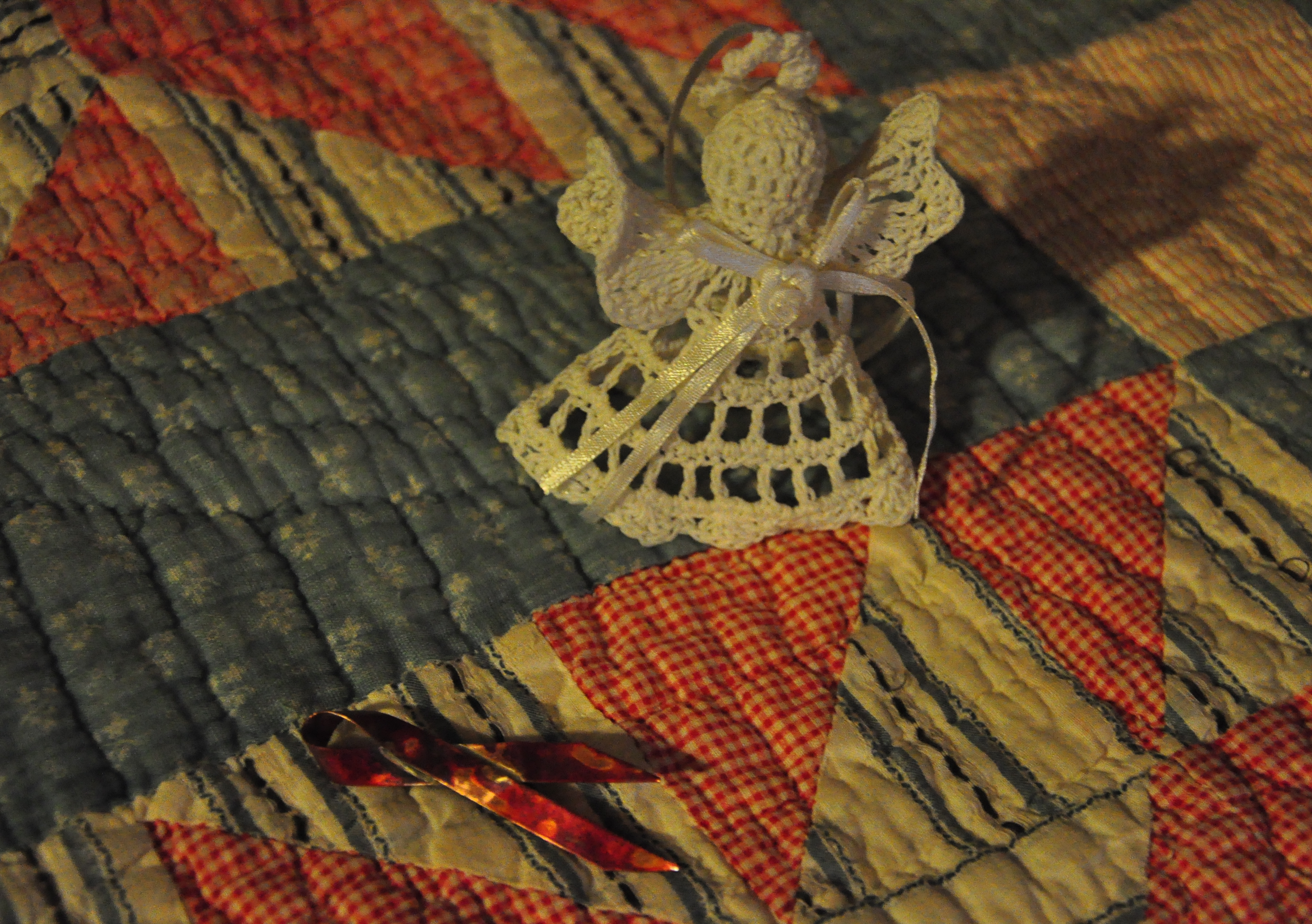
 

After a harsh winter…

No holiday should be a time of sorrow, a place acquainted with grief.  Certainly not Thanksgiving.  There is nothing in the name that suggests loss.  It’s a time to gather with family and friends.  A time to “give thanks”.  Who wants to give thanks for loss or difficulty?  Nevertheless, we are faced with the reality that Thanksgiving is experienced in a context that includes hardship and tragedy.

I’ve thought a lot about the marriage of gratitude and grief during this Thanksgiving holiday.  Maybe it was writing the series of posts about loss.  Maybe it was spending time with three generations of family. Maybe it was attending the funeral of a friend  two days after Thanksgiving.

I decided to revisit how this holiday came to be, so I googled “Thanksgiving”.  A sentence caught my eye.

“The first American Thanksgiving was celebrated in 1621, to commemorate the harvest reaped by the Plymouth Colony after a harsh winter.”

On that first holiday they gave thanks for the bounty of the harvest, “after a harsh winter.”   Their celebration was based on having survived a season of hard work, tragedy, and loss.  They gave thanks for the gift of plenty.  They gave thanks for the discovery of their own strength and resilience through difficulty.

President Abraham Lincoln proclaimed a national day of thanks in October, 1863.  A day of giving thanks, in the midst of the Civil War.  What was there to be thankful for in a time of such internal turmoil?  How could we be grateful in the face of so much destruction and death?  Perhaps Lincoln hoped that a day of Thanksgiving might remind us of our connection rather than all that divided us.  That our strength and resilience might unite us once more.

It seems that Thanksgiving has always been about gratitude in the midst of loss.  Gratitude for the gift of time, of health, of relationship.  John Claypool came to understand gratitude “after a harsh winter,” when his ten year old daughter died of leukemia. In the midst of his grief he realized that he had never been promised a span of time with her.  That each year had been a gift.  He began to move from anger that he had been robbed of a lifetime with her, to thanksgiving for every unpromised moment shared over those ten years.  Claypool discovered the gift of his own resilience.  Grounded in the strength that comes from adversity, he made his way beyond his own winter of grief to a place of healing gratitude.

What if our clearest moments of resilience and strength are mined from the landscape of our disappointments and tragedies?  What if the key to discovering these gifts is our willingness to fall into the abyss of our grief.  Psychology Today, Psych Basics, notes that,

“Resilience is that ineffable quality that allows some people to be knocked down by life and come back stronger than ever. Rather than letting failure overcome them and drain their resolve, they find a way to rise from the ashes. Psychologists have identified some of the factors that make someone resilient, among them a positive attitude, optimism, the ability to regulate emotions, and the ability to see failure as a form of helpful feedback. Even after a misfortune, blessed with such an outlook, resilient people are able to change course and soldier on.”

What does it mean to “soldier on”?  I don’t think it means being an untouchable stoic who never falters, never sheds a tear.  I think to “soldier on” may mean that we continue to rise in all our faltering, tearful, uncertain, grieving humanness. Continuing to rise again, and again, until we find a new balance.

J.R. Martinez began to “change course and soldier on” a long time before he won Dancing With the Stars.  After his win, he received a note from US Secretary of Defense, Leon Panetta that read:

“Your strength and spirit captivated the nation, and your victory sends a strong message about the strength and resilience of our wounded warriors.”

In reality, we are all wounded warriors, struggling to soldier on after our own harsh winter, to a place of thanksgiving.  I hope as you sat with loved ones at your Thanksgiving table, you received the gift of strength and resilience that comes after surviving a harsh winter with grief and gratitude.

Papa’s Stocking

I attended a Hospice Memorial service just before Thanksgiving several years ago.  The room was filled with families and friends who had experienced the death of someone they loved during the past year.  It was a time of remembering.  And a time to focus on the journey of living through grief.

Loss is one of the few experiences besides our birth that is universal.  We would be hard pressed to find a single person in a crowd, who has not had some personal contact with grief.  How is it then that grief can feel so solitary?  Perhaps that mixture of solitary and universal is why talking about our grief brings both pain and relief.  But talking about loss and the grief that follows is important if we are to weave both joy and sorrow into our own rich fabric.

I don’t remember the name of the speaker at that Hospice service, but I remember the personal story he told about finding joy in the midst of grief.   After his wife’s mother passed away, his father in law came to live in their home.  He quickly became an integral part of their daily lives.  And then last year, in the fall, Papa had died.  The man, his wife, and two daughters were left with the empty spaces that Papa had once filled.  As Christmas drew near, the depth of their loss was magnified.  Christmas traditions that had been a source of joy, were now a reminder of Papa’s absence.  This was especially true when it was time to hang their Christmas stockings.  There was Papa’s stocking, empty.  Just like his chair at the table.  Just like the hole left in their hearts.

They began to talk about the pain of Papa’s absence, and the dilemma of how to have Christmas without him.  A new tradition, a ritual of healing, was born out of that conversation.  Papa’s stocking would be hung in its place on the mantel, with slips of paper near by.  In the days leading up to Christmas morning, family members wrote their thoughts, memories, feelings about Papa and dropped them in his stocking.  On Christmas morning after presents had been opened, and their own stockings emptied, they read the notes from Papa’s stocking. There were tears, and laughter, and connection with each other and with Papa on that Christmas morning.

I don’t know if they hung Papa’s stocking beyond that first year he was gone.  But I do know their Christmas story is a wonderful example of partnering with grief to create a moment of celebration that will last a lifetime. They had discovered that although Papa was gone, he was not lost to them.  Sometimes healing comes not from avoiding the painful moment, but from stepping into it to create a new meaning.

I wish it was not yours to do…

A child’s death at any age leaves a gaping hole.  Before birth or after.  When your child is young or old. Their death separates you from all that is living.  A painful gap between the world that was taken from you, and the flat, grey world in which you find yourself. We see your pain, but we don’t know what to do with it.  It is palpable.  We want to acknowledge your loss, and maybe even apologize for the relief we feel every time we look at our own child, knowing that our heart is still whole, while yours is not.  So we walk with you, not because we know exactly how you feel, but because we don’t want you to be alone.  We find a way, however awkward, to say we’re sorry that this is now your job…

How You Rise Each Day

I wish
It were not
Yours to do.

But it is
Your pain,
And you have wrestled it
To the ground,
Rising again
And again
Until you found its heart
And forced it to join you
In celebration of him,
Your son,
John Michael.

It is a mystery to me
How you rise each day
To be reminded
That you are,
And he is not.

Perhaps because you were
His beginning,
And witness to his brief present,
Now you must become his future.
Walking where he cannot,
Breathing life into each
Precious dream
Until his footprints surround us
With all he would have been
Had he not gone so soon.

I wish
It was not
Yours to do.

But it is your grief,
And you have donned its
Black cloak of mourning
With courage,
Determined to dance again
In celebration of him,
Your son,
John Michael.


And dance you will.
Slowly,
At times halting,
Then with confidence
And joy,
Filling the world again
With color,
Vibrant,
Youthful
As you dance not your dance,
But his,
Your son,
John Michael.

© Paulann Condray Canty, 2011 


“Death comes to our dances, and if we dance at all, it must be in her forbidding presence.  But the wondrous conclusion is that we who must die, must dance, and that both are our destiny, and neither dying nor dancing is missing from the whole of life.”                                                                                                                 —-Calvin Miller

Thank you, Skip and Marsha, for living your journey of turning mourning into dancing before us.  You give us hope that having come through the dark night, we too can return to the dance.  Thank you for not hiding your pain from us.  Thank you for letting us join you in celebrating your son’s life.

In Memory of

John Michael Gore
July 27, 1984 – October 11, 2009

“a person of sorrows, acquainted with grief”

"a person of sorrows, acquainted with grief."My grandfather died at sixty nine, after a life filled with farming, ranching, and carpentering on the side.  My great grandmother, Nora, was still living and ninety years old.  She had lost her oldest grandson, and less than two years later, her husband.  She had been a widow for thirty five years.  I was devastated by my grandfather’s death.  But, I guess I thought my great grandmother had seen so much loss and grief in her ninety years, that it was different for her.  Maybe she had gained immunity from loss.  And then she was in front of his casket, weeping and repeating, “My baby, oh, my baby”, a mantra that captured all she had lost.  In that moment I knew there was no age limit, no statute of limitations, no point at which losing your child felt less, rather than more.

John Claypool wrote Tracks of a Fellow Struggler, following the death of his ten year old daughter from acute leukemia.  He reminds us that we are all “a person of sorrows, and acquainted with grief”, for grief is ours whenever we lose something we value.  Claypool identifies loss and grief , not as isolated events, but as an integral part of our life journey.

“Learning to handle these in a healthy way–learning how to lose, so to speak–is one of life’s most important challenges.  It can hardly be begun too soon.”

He acknowledges our attempts to protect our children from grief, while pointing out that…

“as soon as a child is old enough to love something that can be lost, that one is a candidate to become ‘a person of sorrows, acquainted with grief.’  Very few get very far without experiencing loss in some way.

“The truth is–for every one of us–that there is no way to avoid the trauma of loss if we love even a little.  This is what makes the task of learning to handle grief so important.”

I think my great grandmother had spent her life “learning to lose”.  She was well acquainted with grief.  I watched her handle loss by returning to life, from my earliest memories until her own death at ninety-two.  I also watched her step into the painful presence of loss when my grandfather died.

I have not had to find life after the death of a child.  Having stood by as friends entered this dark night of the soul, I have asked myself the question a colleague of John Claypool asked.  “Those of us who have not been there wonder what it is like out there in the Darkness.  Can you tell us?”  Claypool’s response was both profound and ambiguous.  “Yes and no.”  Perhaps the path to learning to handle grief begins with the courage to start the conversation.

It was the best of times, it was the worst of times,…

As we rapidly approach the holiday period that includes Thanksgiving, Christmas, and New Years, I feel compelled to write about loss.  It seems odd doesn’t it, that holidays and celebration would leave me thinking about the sadness that can surround us during our “happy” times.  What a contradiction that the very happiness we feel reminds us of the changes we have endured, and the people who will not be there to join us in the next joyous occasion.

Charles Dickens opened A Tale of Two Cities with:

It was the best of times, it was the worst of times,… it was the season of Light, it was the season of Darkness, it was the spring of hope, it was the winter of despair, we had everything before us, we had nothing before us, …

Dickens reminds us that our joy and sorrow coexist.  So, because the period from November 1 to January 2 is a strange mix of “the best of times” and “the worst of times”,  I will think out loud about what it means to step into a single moment of mourning loss and celebrating life.  Maybe that’s what Walter Wangerin intended when he titled his book, Mourning Into Dancing.  Maybe he wanted to help us find words to describe our experience with that thing so present, and so unspoken, death.

Death comes, and we grieve.  If Dickens had written about the contradiction of grief, he might have said,

Grief is an odd thing.  Reminder of our loss and the last connection between us and the person we loved.  Our numbing and our unspeakable pain.  Our tears and our rage. Grief feels like the enemy, while absorbing our time like a best friend.  At once universal and unique.

I believe there is power in our stories.  I believe there is healing and growth in our stories of loss.  I believe there is beauty, and yes, even celebration in sharing our stories.

Turning the day RED

Today, December 1st, is World AIDS Day.  For years the symbol of a single red ribbon has called us to care, and to act.  In 1996, I completed my master’s thesis on the impact of  individuals disclosing to their family that they were HIV positive. During my research I interviewed people diagnosed with HIV or AIDS and in various stages of their journey with a terminal illness.  My time spent hearing their stories was life changing.

I discovered individuals living with courage in the face of a disease that isolated and ostracized.  I discovered many families rising up with compassion and integrity to surround their loved one with their presence.  In spite of the stigma, the known and the unknown, the agony of watching their child, sibling, parent, spouse, friend waste away before their eyes. . .they stayed, and they loved.

I discovered the power of numbers to tell us, “Somebody should do something.”.  I discovered the power of names and faces that told me, “I must do something.”.

A lot has changed in the 15 years since I heard those stories.  Too many have died.  Medicine has helped the battle be more chronic and less terminal.  We’ve gotten smarter and better at prevention.

What hasn’t changed?

  • We are still at risk of letting stigma and ignorance blind us to the names and faces of the individuals and families living with AIDS.
  • We are still at risk of believing HIV/AIDS is not our problem.
  • We are still at risk of robbing ourselves of the gift of courageous stories in exchange for our compassion and action.

We all know someone who has been affected by HIV/AIDS. . .even if we don’t know who they are.  My hope is this is the day we choose to be the eyes and ears of compassion in all our encounters, to those whose wounds are obvious, and to those whose wounds we can’t see.  After all, we are all walking wounded.


What’s in a name?

The radio host was giving the latest update on the BP oil spill in the gulf.  He reviewed the numbers…of gallons of oil, dollars lost, estimates of damage, benefits owed to those affected, and the lives lost.  Then the show took an unexpected turn.  The host began to list the names of the men who died while working on the Deep Water Horizon.

He spoke about each man, painting a brief, personal portrait of his life.  He talked about wives and fiancés, children, unborn to young adults.  He told about interests and hobbies.  He gave witness to each life and the tremendous void left by each death.  I felt the weight of each loss as it spread beyond family to friends, to communities, to a nation, and to me.

I realized that in spite of the months of “late breaking news” about the BP catastrophe, I had only heard these men mentioned a handful of times since the day they died, and only as a group of 11 dead.  This was the first time I knew them individually, by name, with a life story.  I was embarrassed and ashamed by the lack of attention given to this loss.

Numbers are important.  They tell us the size of impact, whether we’re talking about the casualties of war, the rise in poverty, the dead after Katrina, or how many victims of domestic violence are housed in shelters.  Numbers tell us something must be done.  But numbers don’t speak to our heart.

Names are different than numbers.  I’ve known since April 20, 2010, that 11 workers died in the BP explosion.  But it wasn’t until I heard their names and stories that they stepped off the news page and became real.  These men who had lived, worked, loved, and died are now my loss too.

If numbers tell us something must be done, names tell us we must do something.  Names tell us that each number represents a person, a history, a story not unlike our own.  We are not separate in our moments of joy, not isolated in moments of loss. Ernest Hemingway knew it when he wrote:

“Ask not for whom the bell tolls, it tolls for thee.”

On April 20, 2010, eleven men died while working on the Deep Water Horizon oil rig in the Gulf of Mexico.  Their names are listed below.  Their loss calls us to care and to act, for their deaths are our loss too.


Jason Anderson, 35, Bay City, TX, father of two.
Aaron Dale “Bubba” Burkeen, 37, Neshoba Co, MS, survived by his wife Rhonda and two children.
Donald Clark, 48, Newellton, LA, survived by his wife Sheila, two sons, and two daughters.
Stephen Ray Curtis, 40,  Georgetown, LA, survived by his wife and two teenage children.
Gordon Jones, 28, Baton Rouge, LA, left wife, Michelle, who was three weeks from delivery of a daughter.
Roy Wyatt Kemp, 27, survived by his wife Courtney, and two children.
Karl Keppinger, Jr., 38, Natchez, MS, veteran of Operation Desert Storm in Iraq, father of one child.
Keith Blair Manuel, 56, Gonzales, LA, father of three daughters, avid LSU fan.
Dewey Revette, 48, State Line, MS, 29 years experience drilling.
Shane Roshto, 22, Franklin Co, MS, survived by his wife, Natalie, and a toddler son.
Adam Weise, 24, Yorktown, TX, youngest of four children, started working offshore after graduating from high school.

Altered Again

I never met Jill Hollis.  In fact I had never heard of Jill Hollis.  That changed last Thursday.  I was in the car running errands, listening to bits and pieces of “The Story” with Dick Gordon.  I found myself in back story, not knowing where it began.  It became clear as the story continued that Jill Hollis had, for some time, struggled with some kind of disability and in the midst of that determined that she would not live a diminished life.

I sat in the car outside my next stop totally absorbed by the archived interview with this courageous woman.  As the story neared an end Dick informed his listeners that Jill Hollis had been diagnosed four years ago with ALS, Lou Gehrig’s disease.  He spoke of the blog she created as her disease progressed.  And then he was expressing his sadness and sympathy that Jill Hollis had finished her battle two days earlier, Tuesday, August 31.  I was caught totally off guard and felt a sudden sadness that I was only now discovering this woman and her story.

Jill Hollis hovered in my thoughts for the rest of the day.  As soon as I could I went in search of her blog.  I wanted to hear her words, have a sense of her journey, and remember her.  The blog home page loaded.  The title:  Altered.  She had captured her experience in a single, clear, complete word.  I read her thoughts and her family’s in the days leading up to and following her death.  I found courage, fear, determination, growth, humanity, all expressed with unedited honesty as ALS continued to alter her.

Jill’s blog title has stayed with me, surfacing for another look from time to time.  Altered.  Aren’t we all “altered” by living?  We come here so innocent and in a very short time begin to lose that innocence to experience.  Don’t we all, like Jill, have the chance to decide we will live fully and undiminished in the face of loss and limitation.

Sally Jesse Raphael, the talk show host of 25 years ago, welcomed a mother and her 9 year son on her show.  Both had been severely burned and disfigured in a gas explosion in their home a few years before.  The son had had multiple surgeries with more to come to remove scarring and rebuild his face.  An audience member asked the mother how she had helped her son cope with the stares, comments, and questions that often came when they were in public.  The mom responded, “I’ve told him everyone has scars.  We just wear ours on the outside.”  What an insightful mom!  And she’s right.  We do all have our scars, left by the life decisions and experiences that have altered us.  Being altered scars, but it also allows us to discover our own strength and resilience.  And then, we are altered again.

I don’t know Jill Hollis, but her story has altered me.  My thoughts and prayers are with her family during their unspeakable loss as Jill has been altered again to a journey without ALS.  Thank you Jill.